📖 Introduction & Why This Book Matters
In the Catenan Republic, power is a resource. The Hierarchy extracts it from the bodies of the working class, siphons it upward, and calls the arrangement civilization.
In The Will of the Many, Islington builds a Roman-inspired empire with a magic system rooted in cession—you give up your "Will" to those above you, and those above you give theirs to those above them, and somewhere at the top, someone is very comfortable with that arrangement. The Sappers make the extraction literal: drain enough Will from a person and they become a hollow shell. Efficient and monstrous.
At the center of this world is a boy trying to make it past his eighteenth birthday without ceding his Will to the Republic. That's the tension that drives everything. Not the world-building—though it's meticulous—and not the plot—though it moves fast. What this book is actually about is a single uncomfortable question: at what point does staying silent make you responsible for what the silence permits?
✍️ Plot Summary
While official Catenan records list him as a mere orphan, Vis is secretly Diago, the last surviving prince of the conquered island nation of Suus. For three grueling years since his family was murdered and his homeland destroyed, he has carved out a tenuous existence in the slums of Letens, surviving by working as a guard at a brutal Hierarchy prison and fighting in illegal underground matches. Though he has managed to stay hidden, his seventeenth birthday has recently passed, meaning he has little more than a year left before the Republic's relentless laws will forcibly extract his "Will" using a torturous Sapper device.
This precarious life shatters when Senator Magnus Quintus Ulciscor Telimus visits the prison and discovers a secret the Hierarchy would desperately like to bury: Vis possesses a unique immunity to Sappers. Viewing this anomaly not as a threat but as a profound asset, Ulciscor formally adopts the boy and enrolls him in the elite Catenan Academy on the isolated island of Solivagus. His mission is highly dangerous—to spy on the school’s enigmatic Principalis, Veridius Julii, and unearth the sinister truth behind the suspicious death of Ulciscor’s brother, Caeror, which was officially ruled a suicide but is suspected to be murder.
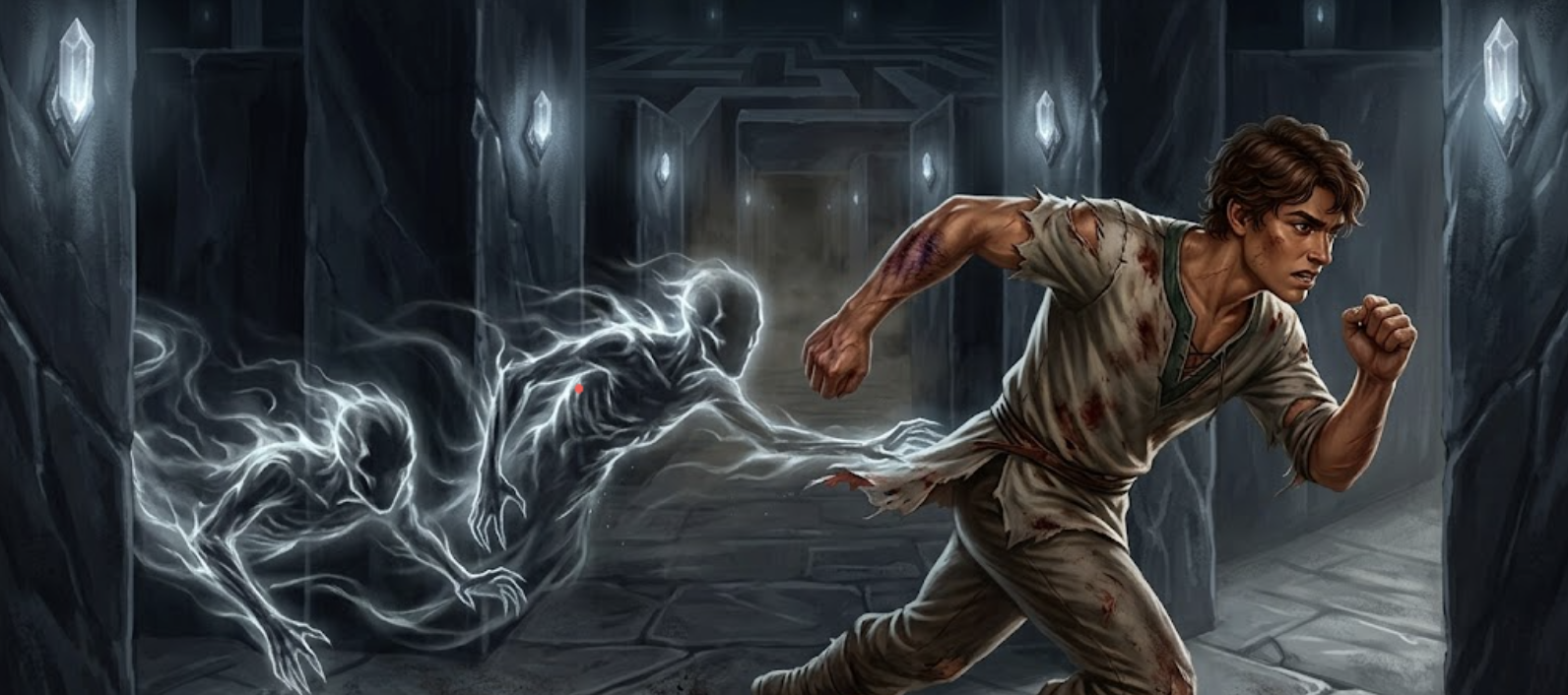
The Academy operates on a ruthless meritocracy where advancement inherently requires displacement; to climb the ranks, a student must forcibly take the place of someone above them. Starting at the very bottom in Class Seven, Vis must battle his way upward through brutal intellectual trials and a shape-shifting, perilous Labyrinth. Amidst this cutthroat environment, he manages to forge genuine bonds with Callidus, a brilliant Governance senator’s son who is being blackmailed over deadly Academy secrets, and Eidhin, a fierce warrior whose people were decimated by Catenan expansion.
The localized stakes of the Academy dramatically escalate during a gladiatorial naumachia, when a ruthless rebel faction known as the Anguis orchestrates a devastating massacre. Vis is forced to intervene, only to be shocked by the revelation that the rebel leader, Melior, is actually Estevan—a former advisor to his late father. This tragedy violently intertwines the Academy's private cruelties with the outside world's public horrors, forcing Vis to confront the ghosts of his past while trying to secure his future.
The narrative culminates in the deadly Iudicium, the Academy’s grueling final exam that quickly devolves into a brutal hunt orchestrated by Anguis infiltrators masquerading as safety teams. Vis must survive the conspiracy alongside his friends and fight to win the rank of Domitor, knowing it is the only way to secure the standing necessary to dictate his own occupational placement in a society designed to strip him of autonomy. Along the way, he suffers profound loss, carrying his friend Callidus through the forest until he tragically succumbs to his wounds.
Vis ultimately wins, but the victory is marked by a devastating and complex betrayal at the ruins. At the climax of the trials, Emissa—a girl he deeply trusted and was falling for—arrives with her eyes flooded completely black from drawing on Will and saves his life by burying an obsidian dagger into an attacking Sextus guard. She rushes to his side to tend to his wounds, but as she cuts away his tunic, she suddenly freezes, terrified by something she sees on his injured arm. Backing away, she demands the golden Heart of Jovan so she can win the Iudicium, frantically claiming she can't risk them getting separated. When Vis tosses the Heart at her feet, the imbued obsidian dagger launches toward Vis, burying itself deep into his stomach and relentlessly pushing him backward over the edge of a towering ruin. Yet, as he plunges toward the river below, the Heart miraculously snaps back into his hand, allowing him to survive the fall, win the Labyrinth's ultimate prize, and pledge his future to Governance.
💡 Key Takeaways & Insights
- Silence is a Choice. The Hierarchy requires compliance: cede your Will, don’t ask questions, and the machine runs. Rebel leaders argue that staying in the system, even passively, is participation—a framing most citizens reject. This moral tension peaks during Vis’s intense clashes with Anguis leaders Melior (Vis’s former tutor, Estevan) and Sedotia (Ulciscor’s wife, Relucia). At the naumachia, Melior insists his attack on the masses is justified because they actively “hoist the entire Hierarchy on their shoulders.” This debate ultimately culminates when he violently forces Vis’s hand to drive a stylus into his own brain, proclaiming that “inaction picks a side.” By warning Vis not to “mistake inaction for neutrality,” the narrative forces readers to ask exactly when the desperate need to survive transforms into unforgivable complicity.
- The Illusion of Meritocracy. The Academy looks like a pure test of skill, but Callidus—who has watched the game from the inside—knows better. He understands that a fair system cannot exist where pride and selfishness are involved, and that the rules are set by people who directly benefit from them. The trials are designed by leaders who already know what winning looks like, turning what appears to be a competition into a curated succession based on pre-calculated openings in the Hierarchy. Even Principalis Veridius admits as much, explaining to Vis that he must find a way around his Praeceptor's discrimination. Veridius refuses to interfere because students need to learn to overcome obstacles themselves, noting that the Academy is meant to reflect the prejudice and unfair challenges of the real world rather than protect students from them. In the end, the elite are not formed by the Academy as much as they are confirmed by it, inherently rewarding the already-privileged children of senators and knights who have been groomed for this exact system since birth.
- Grief as a Motivator. Every major character in this book is running on loss, their trauma the ultimate catalyst for their actions. Ulciscor’s unresolved grief over his brother Caeror's supposed suicide has calcified into a ruthless compulsion, blinding him to the danger of his relentless crusade against Veridius. Similarly, Vis's profound grief over the massacre of his royal family fuels his fierce survival instincts, forcing him to bury his true identity beneath a hardened Catenan persona so he can honor his fallen people without completely breaking. Eidhin’s surly exterior masks the devastating betrayal and loss of his Cymrian tribe's cultural honor after his father surrendered them to the Hierarchy, stripping Eidhin of his freedom by forcing him to attend the Academy against his will. Finally, despite his charming facade, Principalis Veridius is driven by the tragic deaths of his friends during his own Iudicium; his manipulative, deadly actions at the Academy are ultimately fueled by the world-shattering discoveries he made there and a desperate obsession to avoid another Cataclysm.
🤯 The Most Interesting or Unexpected Part
The most shocking twist occurs in the quiet confines of the Telimus family tomb at the Necropolis. When Ulciscor introduces Vis to his wife, Relucia, Vis instantly recognizes her as "Sedotia"—the ruthless Anguis rebel who orchestrated the Transvect crash and blackmailed him into his current predicament. The revelation that Vis’s new adoptive mother is secretly a high-ranking terrorist playing a dangerous double game within the Catenan elite completely shifts the power dynamics of the story. During a tense secret conversation, Relucia admits she manipulated events so Ulciscor would find Vis at Letens Prison, proving she is relentlessly orchestrating the board from the shadows. This jaw-dropping connection is primed to play a massive role in Book 2, as Vis is now terrifyingly trapped between Ulciscor’s blind crusade, his new pledge to Governance, and Relucia’s brutal, system-toppling agenda.
🏛️ How This Book Applies to Real Life
- Labor extraction and the architecture of consent. The cession of Will is one of the most precise metaphors for wage labor and systemic exploitation in recent fantasy. The Hierarchy doesn’t take from people by force. It builds a system where people hand their Will over voluntarily, because the alternative is worse. The Sappers exist for those who won’t comply. Compliance exists so the Sappers are rarely needed. Real institutions function the same way.
- The burden of impossible leadership. Vis remembers his father teaching him that there is no perfect ruler—leadership demands kindness and ruthlessness simultaneously, honesty and cunning in the same breath. These requirements contradict each other. The lesson isn’t that balance is achievable. It’s that the discomfort of holding both is the job.
Who should read The Will of the Many?
- Lovers of Red Rising by Pierce Brown who want more institutional brutality and less orbital warfare.
- Fans of Mistborn by Brandon Sanderson who got hooked on magic systems built around oppression and class, and want that same DNA inside a Roman-empire framework.
📚 Final Rating
4.7 / 5 Stars
The Will of the Many is a masterclass in pacing and structural tension. The one thing holding it from a perfect score: the middle sections at the Academy occasionally drag under the sheer accumulation of trials. The Labyrinth sequences are brilliant; there are slightly too many of them.
Discussion Topics
Diago’s Backstory and Identity
Vis spends the entire novel hiding his true identity as Diago, the last prince of Suus. His father taught him that the Hierarchy is fundamentally corrupted by greed, and that true leadership is an impossible burden with no clean resolution.
- How does Vis’s hidden trauma shape the way he relates to authority figures like Ulciscor and Veridius—and does that relationship feel like trust, strategy, or something in between?
- Did Diago’s royal upbringing give him an unfair advantage at the Academy, or was his identity entirely a liability?
- At the end of the novel, Vis pledges to Governance. Is this a betrayal of his father’s ideals, or the most dangerous and committed way to pursue them?
The Morality of the Hierarchy vs. The Anguis
The Hierarchy extracts life from its citizens and calls it civilization. The Anguis—including Melior/Estevan and Relucia—argue that anyone who cedes Will is complicit in that extraction. They justify mass murder at the naumachia as the necessary cost of liberation.
- Do you agree with Relucia that inaction is not neutrality—that staying in the system is a decision to sustain it?
- Are the Anguis justified in their violence against citizens of the Republic, or does targeting bystanders collapse their moral argument?
- Is Vis’s refusal to join the Anguis an act of moral clarity, or a refusal to accept what dismantling the Hierarchy actually requires?
Trust and Betrayal at the Academy
Vis forms genuine bonds with Callidus and Emissa in a school specifically engineered to make genuine bonds impossible. The Academy’s design assumes everyone will eventually choose advancement over loyalty. In the final moments of the Iudicium, Emissa appears to prove it right—she stabs Vis and attempts to take the heart of Jovan for herself.
- Do you believe Emissa acted of her own free will, or was she compelled by another force or reason?
- Does the ambiguity of her motivation change how you feel about the betrayal—and does it matter?
- How does Callidus’s fate underscore the price the Academy extracts from people who try to hold onto themselves inside it?
- What do you think Principalis Veridius actually wants—and has he been manipulating events the entire time, or is he caught in a machine too?
Discussion
Comments are moderated and will appear after review by the site owner.
No comments yet. Be the first to share your thoughts!