📖 Introduction & Why This Book Matters
Imagine a world where you can externalize, store, and download every memory you’ve ever had—and in exchange, you are granted access to the collective, unfiltered memories of the rest of humanity. A sibling novel to A Visit from the Goon Squad, The Candy House shifts its focus away from the passage of time and dives headfirst into the commodification of memory and digital privacy. It is a profound exploration of the modern tension between surveillance and freedom, asking a deeply unsettling question: in our desperate hunger for authentic human connection, are we willing to surrender the cognitive privacy of our own minds?
✍️ Plot Summary
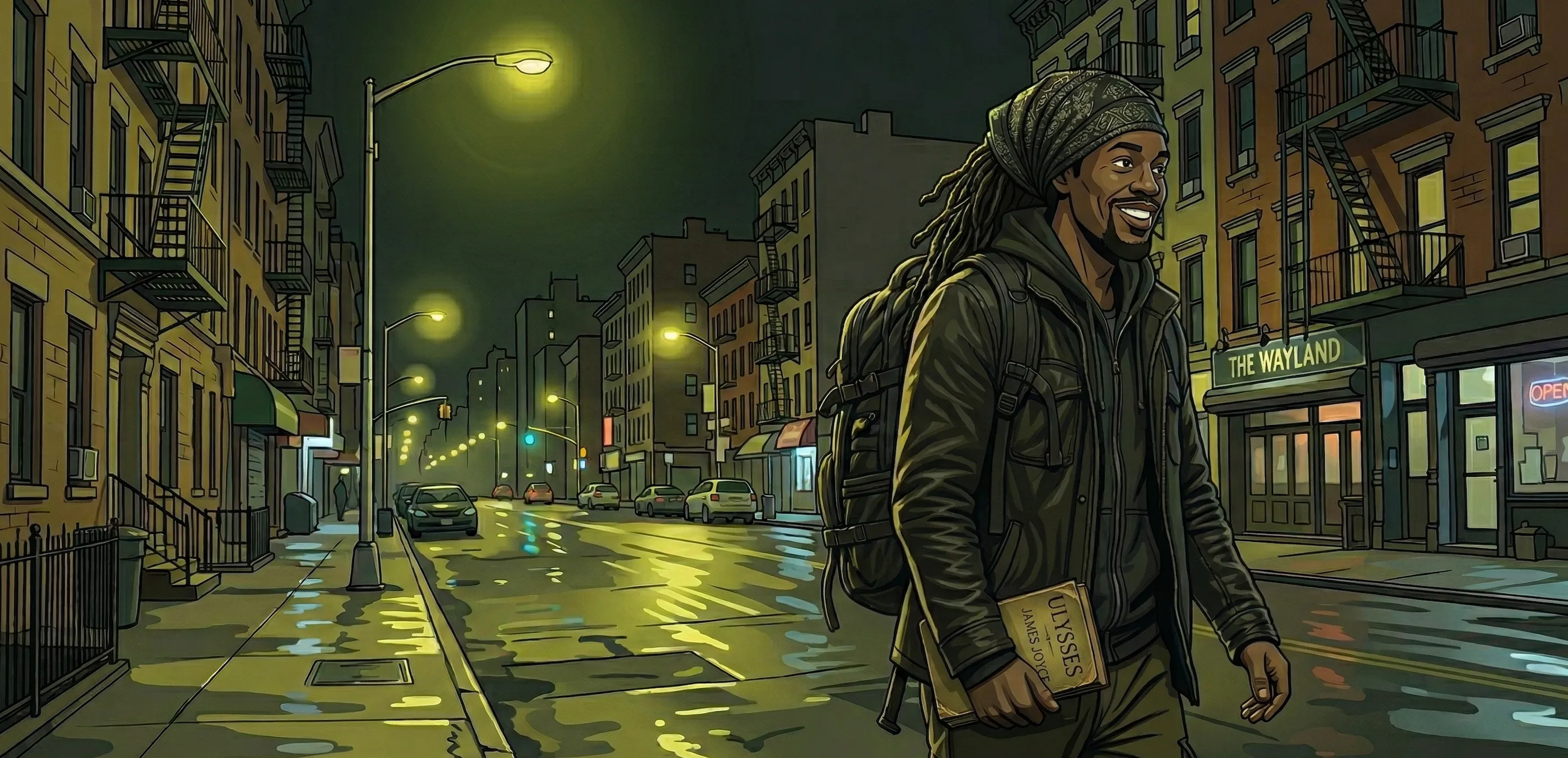
In a near-future world, Bix Bouton—a brilliant tech mogul who revolutionized social media—finds himself paralyzed by a creative void he calls the “Anti-Vision.” Desperate for genuine conversation in a society that treats him like a deity, Bix wanders the freezing streets of New York’s East Village in a disguise. This covert excursion eventually sparks the inspiration for his world-altering invention: “Own Your Unconscious.” The technology allows individuals to upload their memories into a physical “Mandala Cube” and share them to a global “Collective Consciousness,” effectively ending human aloneness while obliterating privacy.
The narrative branches outward from Bix’s invention, weaving a polyphonic, interconnected web of characters spanning from the analog music industry of the 1970s to a hyper-digitized speculative future. At the anchor of the old world is Lou Kline, a manipulative record producer whose toxic lifestyle deeply damages his children. We follow his dyslexic daughter, Roxy, as she battles a lifelong heroin addiction, eventually using her Mandala Cube to relive a perfect childhood day with her father in London. We also track Miles Hollander, a high-powered Chicago lawyer who spirals into a devastating prescription pill addiction. After a catastrophic car crash in Chicago that permanently severs his mistress’s leg, Miles seeks a quiet redemption as a drug counselor and politician in California.
As Bix’s invention becomes ubiquitous, the fabric of society completely fractures into two warring ideological camps. On one side are the “counters”—elite data metrics experts like Lincoln, who obsessively track and monetize human behavior using algorithms originally developed by an anthropologist named Miranda Kline. On the other side is an underground resistance of “eluders,” individuals so desperate to escape this digital omniscience that they vacate their online identities entirely. Led by Mondrian, a non-profit orchestrated by Chris Salazar, these rebels employ proxies and “hermit crab programs” to hide their digital footprints. From California to New York to the shores of the Mediterranean—where a Citizen Agent named Lulu Peale executes a violent covert mission—the novel acts as a sprawling mosaic of humanity trying to reclaim its authenticity.
💡 Key Takeaways & Insights
- The Seductive “Candy House” Trap The title is a direct metaphor for the deceptive nature of “free” digital technologies. Just as the fairy tale of Hansel and Gretel warns us not to trust a candy house, the novel illustrates how society eagerly consumes digital conveniences without realizing they will ultimately pay a perilous, hidden cost.
- Authenticity in an Artificial World Characters go to extreme, often absurd lengths to find genuine emotion in a performative society. This is epitomized by Alfred Hollander, who unleashes horrifying screams on crowded public buses just to witness unvarnished, authentic human panic.
- Parallels to Modern AI Bix’s technology heavily mirrors modern Artificial Intelligence in its insatiable reliance on massive, crowdsourced datasets. However, instead of generating synthetic patterns like today’s AI, this technology trades in authentic, lived human consciousness and literal “gray grabs.”
- The Burden of Omniscience Accessing raw consciousness strips away the polite fictions of society. Experiencing the unfiltered minds of others exposes painful truths, traumatizing characters who look too closely at the private thoughts of the people they love.
🤯 The Most Interesting or Unexpected Part
One of the most unexpected twists in the book is the structural execution of Lulu Peale’s harrowing Mediterranean escape. Instead of a traditional action narrative, her terrifying ordeal—in which she takes a bullet to the shoulder, flees barefoot down a cliffside, and uses a trained “Dissociation Technique” to mentally float above her dying body during a midnight helicopter rescue—is written entirely in the second person as a chilling, detached spy field manual.
🏛️ How This Book Applies to Real Life
- Digital Surveillance and Privacy: Bix’s invention directly mirrors the real-world commodification of user data by social media and AI companies. Society eagerly trades its most intimate memories for convenience, raising questions about what cognitive privacy we have left to lose.
- The Epidemic of Addiction: Miles and Roxy’s parallel struggles with prescription pills and heroin illustrate the modern opioid crisis, emphasizing the universal human desire to escape from deep emotional pain.
Who should read The Candy House?
If you liked the ambitious, interconnected, multi-perspective storytelling in Cloud Atlas by David Mitchell or Station Eleven by Emily St. John Mandel, then you will love the sprawling, polyphonic narrative structure about a fragmented society in The Candy House.
📚 Final Rating
4.1 / 5 stars
I love a good polyphonic novel, probably more than most, but this one at times felt too over the top with the variety of chapter formats.
🎯 Should you read it? Yes, but know this is not a linear story; it is a modular, puzzle-like narrative that requires you to piece together the connections across decades and formats.
🔥 Final Thought In a world constantly begging to be quantified, The Candy House is a glittering reminder that human imagination is the only collective consciousness we truly need.
Discussion Topics
- The Metaphor of the Candy House In the novel, characters directly compare “free” digital platforms to cautionary fairy tales, reminding us that “Nothing is free!” and that you should “Never trust a candy house!”
Discussion Questions: How does the “Candy House” metaphor apply to the apps and social media platforms we use today? Do you believe the conveniences of the internet are worth the “hidden cost” of our personal data? If you had the chance to upload your memories to a Mandala Cube for free, would you take the bait?
- Counters vs. Eluders Society in the book fractures into two camps: the “counters” who embrace empirical metrics and the Collective Consciousness, and the “eluders” who use proxies to disappear from the grid entirely.
Discussion Questions: Which faction do you sympathize with more: the counters or the eluders? Is it possible to completely “elude” society in our current digital age without sacrificing your quality of life? Do you think the “Counters” are malicious, or are they simply adapting to the math of the modern world?
- The Price of Empathy and Omniscience The Collective Consciousness creates a global rise in empathy by letting people experience the minds of others, but it also traumatizes users (like Roxy Kline) by exposing painful, unfiltered truths about their loved ones.
Discussion Questions: If you could access the unfiltered thoughts of your friends or family, would you want to? Does total transparency actually create empathy, or does it destroy the polite boundaries necessary for civilized society? How does Bix’s invention compare to the way we use modern generative AI to understand human behavior?
Discussion
Comments are moderated and will appear after review by the site owner.
No comments yet. Be the first to share your thoughts!