📖 Introduction & Why This Book Matters
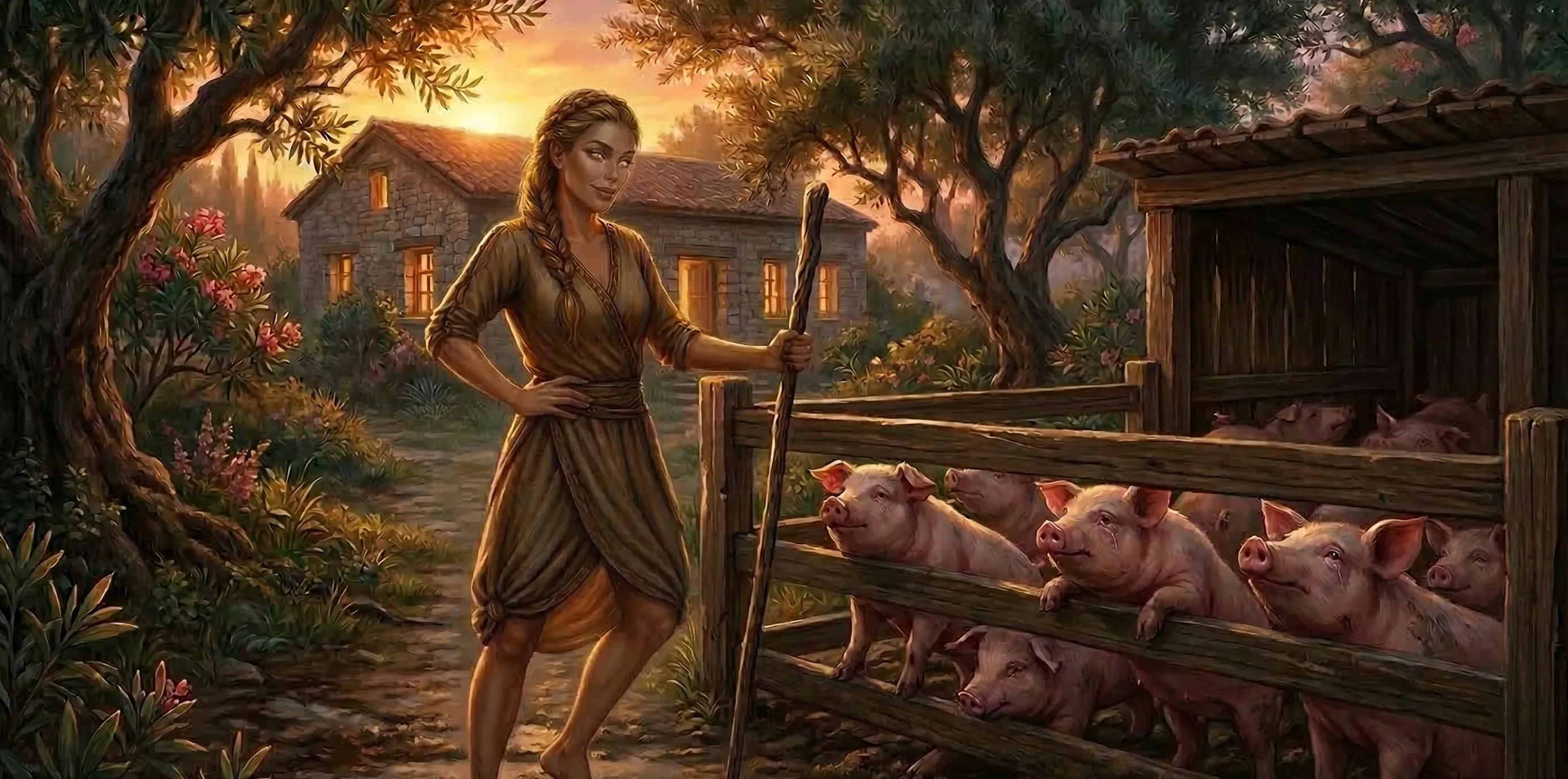
Circe breathes vibrant life into a figure who has historically been relegated to the role of a villainous footnote, the witch of Aiaia who turns men into pigs. It is not merely a retelling of myth, but a profound exploration of the sensation of being an outsider in one’s own family, the crushing weight of an unchanging eternity, and the hard-won journey to female autonomy. While the bards traditionally sing of great male heroes and celestial deities, this book focuses on a “lesser” nymph with a mortal-sounding voice. It explores how true power is forged through resilience, trauma, and unyielding will instead of through divine birthright.
✍️ Plot Summary
Born to the sun god Helios and the nymph Perse, Circe is a strange child who is mocked by her divine family for her mortal-sounding voice and apparent lack of power. Driven by her isolation, she turns to the mortal world for companionship and discovers that she possesses pharmakeia, or witchcraft—the ability to transform the world through herbs and sheer will. When she uses this forbidden magic to turn a mortal fisherman into a god and a romantic rival into the horrific six-headed monster Scylla, a threatened Zeus and her father Helios banish her to the deserted island of Aiaia.
In her solitary exile, Circe finally finds the freedom to hone her craft, taming wild beasts and mastering her magic through grueling trial and error. Over the centuries, her lush island becomes a crossroads for some of the most famous figures of Greek mythology, each teaching her crucial lessons about the true nature of gods and mortals. She is frequently visited by the trickster god Hermes, who becomes her casual lover and brings her news of the outside world. She crosses paths with the brilliant craftsman Daedalus when she is summoned to Crete to assist with the gruesome birth of the Minotaur, a monster engineered by her sister Pasiphaé. Later, she offers refuge to her mortal niece, the witch Medea, and the hero Jason, who are fleeing Colchis after Medea murdered her own brother to secure the Golden Fleece. Eventually, the weary tactician Odysseus and his crew land on her shores; recognizing a kindred spirit, Circe takes him as a lover and learns the harrowing, unglamorous truths of the Trojan War.
Following Odysseus’s departure, Circe gives birth to their son, Telegonus. Her hard-won peace is shattered when the terrifying Olympian goddess Athena arrives, demanding the infant's death to prevent a prophecy that ties the child to Odysseus's doom. Refusing to yield, Circe casts immense protective spells over her island and even ventures into the ocean's darkest depths to bargain with the ancient god Trygon. She endures his agonizing poison to obtain his tail, forging a deadly spear to keep Athena at bay.
Years later, a grown Telegonus leaves the island to seek out his father, but tragically kills Odysseus in a misunderstanding on the beaches of Ithaca using the poisoned spear. Consumed by guilt and grief, Odysseus’s widow, Penelope, and his son, Telemachus, return to Aiaia with Telegonus to seek refuge. Ultimately, Telegonus decides to leave the island under Athena's guidance to found a new empire in the West. Left on Aiaia with Penelope and Telemachus, Circe finds herself drawn to Telemachus's steady, careful nature, and the two fall deeply in love. Realizing that she despises the cruel, unchanging eternity of the gods—who she determines are "more dead than anything, for they are unchanging, and can hold nothing in their hands"—Circe makes a profound final choice. She brews a potion from the magical flowers of her island and drinks it, stripping away her divinity so she can age, truly live, and share a fleeting but vibrant mortal life with the man she loves.
💡 Key Takeaways & Insights
- Divinity is stagnant, while mortality is vibrant life. The novel posits that the gods are trapped in a static eternity of petty grievances, vanity, and cruelty. Circe eventually realizes that the gods are “the opposite of death,” making them “more dead than anything, for they are unchanging, and can hold nothing in their hands.” It is the transience of mortals—their capacity to suffer, age, and die—that gives their lives genuine meaning and courage.
- Witchcraft is a manifestation of endurance and will. Unlike the effortless, instant power of the gods, witchcraft is portrayed as grueling labor. It requires digging roots, failing repeatedly, and pushing through drudgery. Circe notes that gods hate toil, but she embraces it, discovering that her true strength lies in her relentless perseverance.
- The “Hero” narrative is a destructive illusion. The text masterfully deconstructs the glory of famous male heroes. Jason is revealed to be a weak, posturing prince who relies entirely on Medea’s sorcery to survive. Odysseus, the “Best of the Greeks,” is depicted as a man so steeped in war and manipulation that he brings ruin to his own home, ultimately driving his son Telemachus away with his paranoia and rage.
- Monsters are forged by cruelty. Monstrosity in this book is rarely an inherent trait; it is a reaction to powerlessness or abuse. The monstrous Scylla is created out of Circe’s own desperate jealousy. The Minotaur is engineered by Queen Pasiphaé not out of bestial lust, but as a deliberate weapon to terrorize her oppressive husband, King Minos.
🤯 The Most Interesting or Unexpected Part
The most shocking and visceral scene is the birth of the Minotaur. Pasiphaé summons her estranged sister Circe to Crete to assist in her unnatural labor. The reality of the myth is portrayed with grotesque, bloody realism: Daedalus must slice Pasiphaé’s enchanted womb open with a knife. When Circe reaches inside to pull the infant out, the unborn creature attacks her, biting her fingers off with unnatural strength. She has to wrestle the horned, bull-headed baby into a birdcage while it tries to devour her. It is a terrifying sequence that strips away the clean, poetic veneer of Greek mythology to reveal the horrific consequences of the gods’ vanity.
🏛️ How This Book Applies to Real Life
Feminism and Autonomy: Circe’s struggle mirrors the real-world fight for female independence within patriarchal structures. She is dismissed by her father, abused by sailors who see a woman alone as easy prey, and manipulated by male gods. Her journey is about carving out a space of power and safety on her own terms.
Accountability and Guilt: Unlike the other gods who casually ruin mortal lives, Circe wrestles deeply with her guilt over creating Scylla, showing that true maturity requires taking responsibility for one’s worst mistakes.
Who should read Circe?
- Fans of alternate retellings of classic literature and mythology, the likes of A Touch of Darkness by Scarlett St. Clair or Ariadne by Jennifer Saint, or Song of Achilles by Madeline Miller
- Readers who appreciate slow-burn, character-driven fantasy over fast-paced action.
- Anyone who loves explorations of trauma, resilience, and the complexities of motherhood.
📚 Final Rating
4.4 / 5 Stars
Miller’s breathtaking prose and her masterful psychological deconstruction of an ancient myth create a bewitching read that entertains, educates, and inspires. What makes this novel truly exceptional is its reimagined take on famous mythological legends; it is incredibly rewarding to explore the personalities, fears, and motivations of iconic figures—like the brilliant but captive Daedalus, the fiercely desperate Medea, and the war-weary, pragmatic Odysseus—deeply through the intimate lens of their relationships with Circe. The text brilliantly grounds sweeping, epic events—like the yoking of the Colchian bulls or the grim aftermath of the Trojan War—in profound human emotions, making Circe’s centuries-long search for belonging a delightful reading experience.
🎯 Should you read it? Yes. However, readers expecting a relentless, sword-swinging action epic may find the pacing slow. Circe is a deeply introspective, atmospheric biography of a goddess in exile. It lingers on the quiet moments of gardening, weaving, and solitude just as much as it features clashes with Olympian deities. If you are prepared for a beautiful, philosophical meditation on humanity and power, it is an absolute must-read.
🔥 Final Thought In a universe ruled by deities who burn bright and cold, Circe proves that the most formidable power of all is the messy, painful, and fleeting warmth of a mortal heart.
Discussion Topics
- The Contrast Between Gods and Mortals Throughout the novel, Circe is surrounded by immortal beings who are immune to physical consequence and deeply stagnant in their desires. In contrast, she is continually drawn to mortals like Glaucos, Daedalus, and Odysseus, learning from Prometheus that the defining feature of humanity is the endurance of death.
Discussion Questions: How does the author use the concept of death to give meaning to the characters’ lives and choices? Why do you think the gods, despite their immense power, are portrayed as petty and fearful of true change? In what ways does Circe’s mortal-sounding voice serve as an early symbol of her ultimate destiny?
- The Nature and Price of Witchcraft Circe discovers that unlike the innate, effortless power of the Titans and Olympians, pharmakeia (witchcraft) requires relentless drudgery, experimentation, and force of will. Both she and her siblings use this magic to circumvent the authority of their father and Zeus.
Discussion Questions: How does the grueling nature of witchcraft reflect Circe’s personal growth and independence? Compare and contrast how Circe uses her magic with how Pasiphaé and Medea use theirs. What do their choices say about their different reactions to patriarchal oppression? Do you agree with Pasiphaé’s assessment that witchcraft stems from hatred and a desire to defy the gods, or with Circe’s belief that it can stem from love?
- Accountability and the Making of Monsters A central tragedy of Circe’s life is her impulsive decision to transform the nymph Scylla into a monster out of jealousy. Unlike other gods who dismiss the collateral damage of their actions, Circe carries the guilt of the sailors Scylla devours and ultimately risks her life to turn Scylla to stone.
Discussion Questions: How does Circe’s handling of her guilt over Scylla differentiate her from her divine family? Odysseus and Circe discuss how to judge who deserves punishment. Does Circe’s decision to turn the predatory sailors into pigs make her a monster, or a purveyor of justice? Telemachus notes that his father’s actions brought misery to those around him, questioning the traditional definition of a “hero.” How does the novel challenge our preconceived notions of heroism and monstrosity?
Discussion
Comments are moderated and will appear after review by the site owner.
No comments yet. Be the first to share your thoughts!