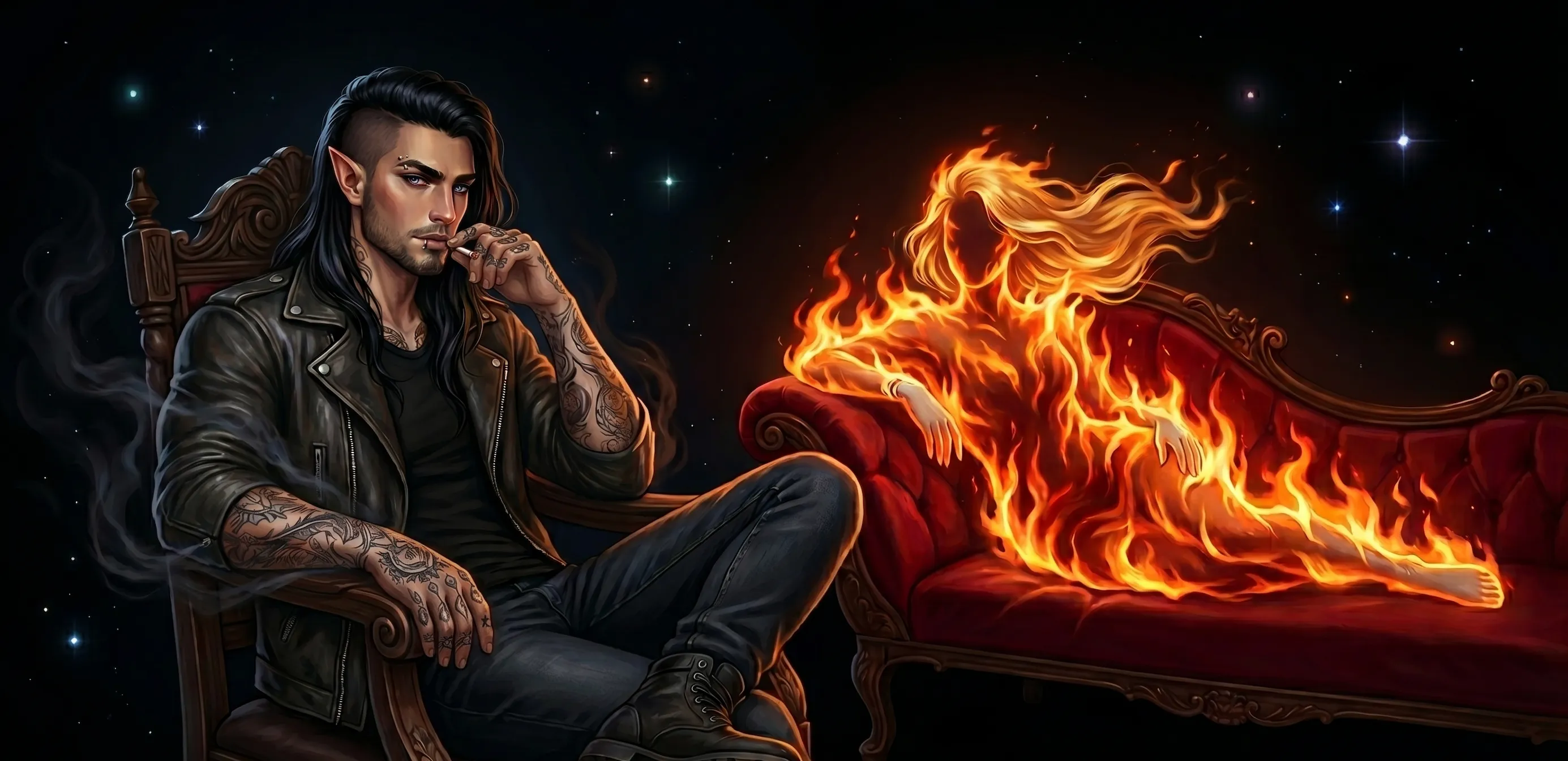
📖 Introduction & Why This Book Matters
House of Sky and Breath is a masterclass in escalating stakes. While the glittering, neon-lit world of Crescent City promises endless parties and magical marvels, the underlying reality is a gritty exploration of the crushing burden of legacy and the moral obligation to dismantle systemic oppression. It challenges readers to ask: can you sit back and find personal happiness knowing your world is powered by the souls of Fae and other Vanir, all of whom were secretly lured to Midgard to feed their parasitic alien overlords?
✍️ Plot Summary
After surviving the apocalyptic events of the spring and assassinating two Archangels, half-Fae Starborn Princess Bryce Quinlan and her mate, the Fallen Angel Hunt Athalar, just want to lie low and find some semblance of normalcy. The Asteri, the immortal overlords of Midgard, have made their orders clear: stay out of trouble, or face absolute destruction. But peace is a fragile illusion in Lunathion. The arrival of a new Archangel, Celestina, brings with her the empire’s most terrifying and sadistic enforcers—Sandriel’s former Triarii, which includes the brutal Pollux, Baxian the Helhound, the Harpy, and Lidia Cervos, the dreaded spy-catcher known as the Hind.
The fragile peace shatters entirely when Bryce and Hunt discover that Bryce’s murdered best friend, Danika Fendyr, left behind world-shattering secrets. Two years prior, Danika discovered a horrifying truth about their world and dispatched a rare thunderbird shifter named Sofie Renast to infiltrate the Asteri’s highly guarded archives. After spending years deep undercover, Sofie retrieves the war-changing intel and initiates a desperate infiltration into the Kavalla death camp to rescue her thirteen-year-old brother, Emile. Though Emile escapes, Sofie is captured and cast into the sea to drown by the Hind.
Suddenly, Emile becomes the most hunted boy on the planet. The fanatical Ophion rebel commander Pippa Spetsos wants to turn the traumatized child into a weapon of mass destruction. The manipulative River Queen dispatches her Captain of Intelligence, Tharion Ketos, to capture the boy for her own hidden agendas. Meanwhile, Bryce’s brother, Crown Prince Ruhn Danaan, is thrust into the fray as he navigates a toxic betrothal, uncovers a deep conspiracy via a telepathic mind-bridge with a rebel spy known as Agent Daybright, and deals with his father’s attempts to force Bryce into a political marriage with Prince Cormac of Avallen.
Refusing to let an innocent child be used as a pawn, Bryce, Hunt, Ruhn, and their allies plunge into a deadly, multi-front shadow war. To save their world and uncover the truth Danika died to protect, they must stage an impossible heist: breaking into the Asteri’s crystal palace in the Eternal City. What they uncover within its subterranean depths will change the history of Midgard forever, forcing impossible sacrifices, testing the bonds of true mates, and pushing the heroes to the absolute brink.
💡 Key Takeaways & Insights
- The Crushing Burden of Legacy Characters are constantly fighting the toxic expectations placed upon them by their bloodlines. Ruhn Danaan actively rebels against the elitist cruelty of his father, the Autumn King, while Bryce hides her immense Starborn power to avoid being commodified as a breeding tool for Fae royals.
- Love as an Act of Rebellion In a world designed to break them, Hunt Athalar’s choice to love Bryce represents a profound healing. Despite centuries of enslavement, torture, and war, Hunt chooses a better future and connection over endless vengeance.
- The Commodification of the Marginalized The novel exposes how empires monetize and consume their citizens. The Under-King literally feeds the souls of the dead to the Asteri’s Dead Gate as a fuel source (secondlight), while mystics are sold into watery cages to be exploited for their cosmic sight.
- The Ambiguity of Enemies and Allies The narrative masterfully blurs the lines of morality. The supposed “holy” Asteri are monstrous oppressors, while the demons of Hel are revealed to be ancient allies fighting to liberate Midgard. Similarly, the terrifying imperial interrogator, the Hind, is secretly Ophion’s greatest spy.
🤯 The Most Interesting or Unexpected Part
The most mind-bending revelation is the plot twist regarding the true nature of the gods. The supposedly benevolent rulers of Midgard, the Asteri, are revealed to be intergalactic parasites who lured the Fae and other Vanir to the planet solely to feed on the magical energy of their souls. This revelation culminates in an absolutely jaw-dropping cliffhanger where Bryce uses the ancient magic of the Horn tattooed on her back, supercharged by a blast of Hunt's lightning, to open a Gate and flee across dimensions to seek an army, unexpectedly landing in the world of Sarah J. Maas’s A Court of Thorns and Roses series and bringing two massive fantasy universes into a direct crossover. Additionally, the reveal that the terrifying imperial interrogator, the Hind, is actually Ruhn’s rebel lover, Agent Daybright, serves as a brilliant double-agent twist.
🏛️ How This Book Applies to Real Life
Systemic Oppression and Colonialism: The Asteri’s rule mirrors real-world colonial exploitation. They lure populations to their land, suppress their true histories, and literally feed off the energy and resources of the working and marginalized classes to sustain their glittering empire. The heroes’ journey is about recognizing complicity within a corrupt system and risking everything to dismantle it.
The Cost of Extremism: The fanaticism of rebel leader Pippa Spetsos highlights how rebellions can sometimes become as monstrous as the empires they fight. Her willingness to slaughter innocent Vanir and weaponize children serves as a cautionary tale about losing one’s humanity in the pursuit of a righteous cause.
Who should read House of Sky and Breath?
If you liked the complex worldbuilding, smoldering romance, and shocking twists in A Court of Thorns and Roses or House of Earth and Blood, then you will love the high-stakes tension, emotional depth, and genre-bending crossover elements in this book.
- Readers who appreciate slow-burn romantasy that evolves into explosive, fast-paced action.
- Anyone who loves explorations of trauma, found family, and characters who subvert traditional chosen-one tropes.
📚 Final Rating
4.4 / 5 Stars
This book earns a highly positive rating for its phenomenal plot twists—specifically the revelation that the Asteri are galactic parasites—and the breathtaking ACOTAR crossover. The deep double-agent dynamics between Lidia and Ruhn keep the espionage plot thrilling, though the devastating cliffhanger where Hunt and Ruhn are captured will leave readers in absolute agony.
🎯 Should you read it? Yes, absolutely. However, readers should be prepared for dense, intricate world-building and a heart-wrenching cliffhanger that demands immediate access to the next book.
🔥 Final Thought House of Sky and Breath is a pulse-pounding, heart-shattering epic that completely redefines its own universe—proving that the brightest stars are forged in the darkest abysses.
Discussion Topics
- The Asteri Revelation In the climax, Bryce discovers that the Asteri are not holy beings, but rather intergalactic parasites who lured the Vanir to Midgard to feed on their magic and souls.
Discussion Questions: How did this revelation change your perspective on the worldbuilding established in the first book? In what ways do the Asteri mirror real-world systems of colonialism and resource exploitation? How does the concept of “firstlight” and “secondlight” serve as a metaphor for capitalist consumption?
- Ruhn and Agent Daybright Ruhn Danaan falls in love with the rebel spy Agent Daybright through a telepathic mind-bridge, only to discover she is actually Lidia Cervos (The Hind), the empire’s most feared and brutal interrogator.
Discussion Questions: Did you suspect Daybright’s true identity before the reveal? Why or why not? How does Lidia’s role as a double agent complicate the morality of the rebellion? Can her horrific acts as the Hind be justified by the lives she saved as Daybright? How does Ruhn’s reaction to the truth reflect his own growth as a character?
- Bryce’s Choice Regarding Emile A major driving force of the plot is the hunt for Emile, whom everyone believes is a powerful thunderbird. Bryce ultimately discovers he has no powers at all, but hides this fact, sending him to live a normal life with her human parents while letting the various factions believe he is still a missing asset.
Discussion Questions: Do you agree with Bryce’s decision to lie to her closest allies, including Hunt, about Emile’s lack of magic? How does Emile’s lack of power subvert the traditional “Chosen One” trope found in most fantasy novels? What does Bryce’s desperate protection of a powerless human boy say about her core values compared to the Vanir elite?
Discussion
Comments are moderated and will appear after review by the site owner.
No comments yet. Be the first to share your thoughts!