📖 Introduction & Why This Book Matters
At its core, House of Flame and Shadow is a powerful exploration of dismantling oppressive, patriarchal hierarchies and toxic legacies. The book hooks the reader immediately by plunging beloved characters into desperate, life-or-death stakes across different galaxies. Ultimately, the story matters because it teaches us that one’s biology or traumatic past does not dictate the future, proving that true strength and redemption are forged through love and defiance.
✍️ Plot Summary
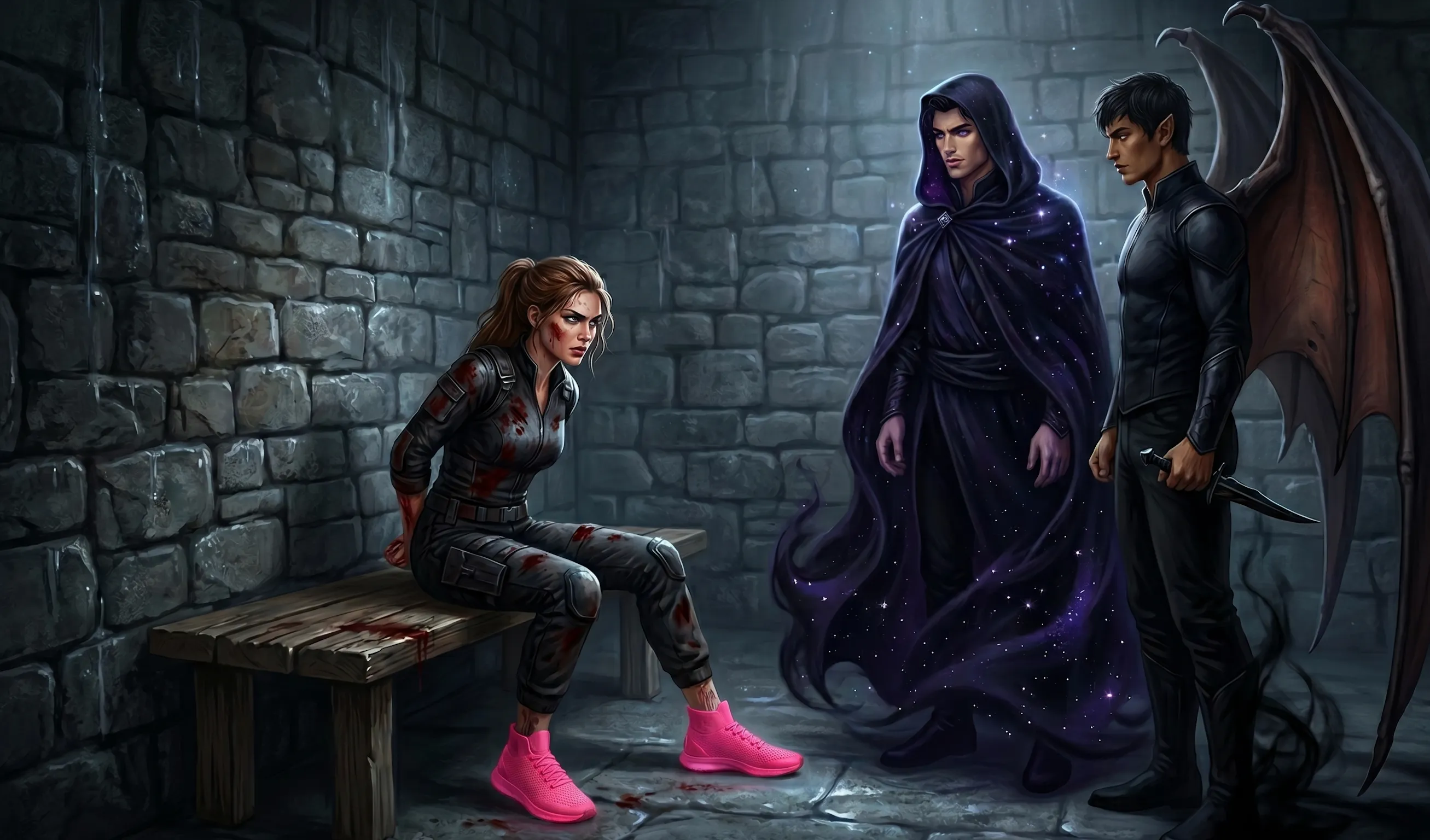
After accidentally teleporting across galaxies to the ancient home world of the Fae, Starborn Princess Bryce Quinlan finds herself trapped in a subterranean cell facing the terrifyingly powerful Rhysand, Azriel, and Nesta from Sarah J. Maas’s A Court of Thorns and Roses universe. Armed with the ancient Horn tattooed on her back, Bryce must navigate treacherous, monster-filled caverns to uncover the dark history of her ancestors. Guided by holographic records of ancient Fae queens, she is forced to confront the bloody truth of her lineage in a desperate bid to unite the legendary Starsword with its lost twin, Truth-Teller.
Meanwhile, back on the planet of Midgard, the stakes have never been more horrific. Bryce’s mate, the angelic warrior Hunt Athalar, and her brother, Fae Crown Prince Ruhn Danaan, are imprisoned in the Asteri’s darkest dungeons. They endure brutal, daily physical and psychological torture at the hands of the imperial executioner, Pollux, to protect the secret of Bryce’s whereabouts. Their survival hinges on Lidia Cervos, the Hind, who secretly operates as the rebel spy Agent Daybright from right under their oppressors’ noses.
As the apocalyptic tension escalates, Bryce’s remaining allies in Crescent City struggle to survive the empire’s wrath. Ithan Holstrom wrestles with his guilt and the heavy mantle of leadership as he seeks to forge a new, just path for the Valbaran wolves. Tharion Ketos finds himself trapped in the Viper Queen’s gladiatorial ring, desperately seeking redemption for his cowardly mistakes. With the Asteri preparing to unleash an army of pilotless mech-suits and tighten their parasitic grip on the planet’s magical energy, Bryce and her found family must ignite a desperate, intergalactic rebellion.
💡 Key Takeaways & Insights
- Love as a Catalyst for Liberation The thematic and emotional core of the book is literalized in Bryce’s tattoo and the magic that ultimately saves them: “Through love, all is possible.”
- Dismantling Toxic Legacies The narrative expertly subverts the “Chosen One” trope, focusing on protagonists who actively reject the sins of their ancestors to build a future rooted in equality.
- Redemption is Earned Through Action Characters such as Lidia Cervos and Tharion Ketos illustrate that while one’s past mistakes do not have to permanently define them, true redemption requires immense, selfless action.
- The Horrors of Colonialism The text heavily critiques systemic oppression, specifically highlighting how the parasitic Asteri enslaved Midgard by poisoning its water to harvest the citizens’ magical energy.
🤯 The Most Interesting or Unexpected Part
One of the most compelling and unexpected twists revolves around Lidia Cervos, the terrifying imperial interrogator known as the Hind. While readers know she is secretly aiding the rebellion as Agent Daybright, it is stunningly revealed that she is also a fiercely protective mother to twin boys, Brann and Actaeon. Her entire cold, regal persona and her horrific tenure serving the Asteri were part of a desperate, agonizing long game to keep her children safely hidden from her monstrous father and her abusers.
🏛️ How This Book Applies to Real Life
- Dismantling Systemic Oppression: Bryce and her allies’ fight against the Asteri mirrors the dismantling of colonial and patriarchal hierarchies in the real world. The Asteri’s parasitic harvesting of magic from Midgard’s citizens is a direct allegory for how real-world empires extract resources and exploit marginalized populations for their own gain.
- Overcoming Generational Trauma: Characters like Ruhn Danaan and Lidia Cervos actively wrestle with the abusive shadows of their fathers, showing that true resilience requires consciously rejecting toxic family legacies and breaking cycles of abuse to forge an honorable identity.
Who should read House of Flame and Shadow?
- If you liked the expansive magical world-building and headstrong female protagonists in A Court of Silver Flames, then you will love the high-stakes crossover fantasy elements about House of Flame and Shadow.
- Fans of “Romantasy” who appreciate epic fantasy blended with modern, colloquial urban-fantasy phrasing and explicit spice.
- Readers with a strong stomach for dark themes who love intricate, multi-POV narratives centered around the power of found family.
📚 Final Rating
4.2 / 5 Stars
The book offers a gripping, high-stakes crossover with beloved characters like Nesta, Rhysand, and Azriel that fans of Sarah J. Maas will adore. However, Bryce’s instantaneous establishment of a democracy following the climax feels a bit too idealistic to realistically fit the gritty, complex world the author built.
🎯 Should you read it? Yes, absolutely. But you should read Sarah J. Maas’s Throne of Glass and A Court of Thorns and Roses series first, as the Crescent City series contains crossover elements from both of Maas’s other universes.
🔥 Final Thought By proving that love is the ultimate weapon against the dark, this thrilling installment guarantees readers will be thinking about the heroes of Crescent City long after the final page is turned.
Discussion Topics
- Lidia’s Hidden Motherhood Lidia Cervos operates as a brutal imperial interrogator while secretly risking her life as a double agent to protect her twin sons.
Discussion Questions: How does the revelation of Lidia’s motherhood change your perception of her past actions? Do you believe the narrative successfully redeems her character? How does her sacrifice compare to the sacrifices made by other parents in the book, like Ember and Randall?
- The Crossover Event Bryce is accidentally transported to the Fae homeworld, teaming up with fan-favorite characters from another universe (Nesta and Azriel) to navigate ancient caverns.
Discussion Questions: Did the inclusion of characters from the author’s other series enhance or detract from Bryce’s individual story? How do the Fae of the Night Court act as a mirror to the Fae of Midgard? What was the thematic significance of Nesta entrusting Bryce with the Mask?
- Abolishing the Monarchy At the conclusion of the story, Bryce uses her newfound, ultimate authority as Queen to entirely abolish the Fae monarchy and donate the royal estates to orphans and refugees.
Discussion Questions: Does Bryce’s decision to dissolve the royal bloodlines effectively conclude Ruhn’s character arc regarding his toxic father? How does this act solidify the book’s core theme of dismantling toxic legacies?
Discussion
Comments are moderated and will appear after review by the site owner.
No comments yet. Be the first to share your thoughts!