📖 Introduction & Why This Book Matters
We Are All Guilty Here delivers a suffocating, atmospheric deep dive into the corrosive nature of family secrets and the devastating betrayal of community trust. From the very first page, Karin Slaughter masterfully hooks the reader, establishing an undeniable sense of impending tragedy. Beyond the breathless pacing, the book matters because it forces readers to confront the terrifying reality of monsters hiding in plain sight. The community actively rallies together to search for the missing girls and demand justice, making the ultimate revelation that respected local figures committed the crimes deeply unsettling. The novel further explores the haunting human fear of making a single, small mistake that costs a loved one their life.
✍️ Plot Summary
In the suffocating summer heat of North Falls, Georgia, fifteen-year-old Madison Dalrymple stands under an oak tree waiting for her best friend, Cheyenne Baker. Cheyenne is late, and Madison is growing increasingly panicked, clutching a bag of weed and harboring secret dreams of escaping to Atlanta. When Chief Deputy Emmy Clifton notices Madison’s distress during the town’s Fourth of July fireworks, she tries to intervene, but Madison rebuffs her. Later, distracted by a fight with her toxic husband, Emmy ignores Madison’s second attempt to reach out. It is a seemingly small moment of neglect that will haunt Emmy for the rest of her life.
Shortly after the fireworks end, both girls vanish into the night. The discovery of their abandoned, blood-stained bicycles on a nearby soccer pitch and a dark backroad launches the town into a frantic search. The community’s efforts to find Madison and Cheyenne end in a devastating discovery when Emmy dives into her great-aunt's pond and pulls the girls' murdered bodies from the water, where they had been chained to a concrete block. The horrific reality of their final hours eventually comes to light, revealing that Madison was brutally tortured for hours and her hands and feet were systematically shattered with a claw hammer, while Cheyenne was beaten, shot in the head, and raped. In the aftermath of the gruesome crime, a local outcast named Adam Huntsinger is framed using manipulated evidence and sent to prison, spending the next twelve years on death row.
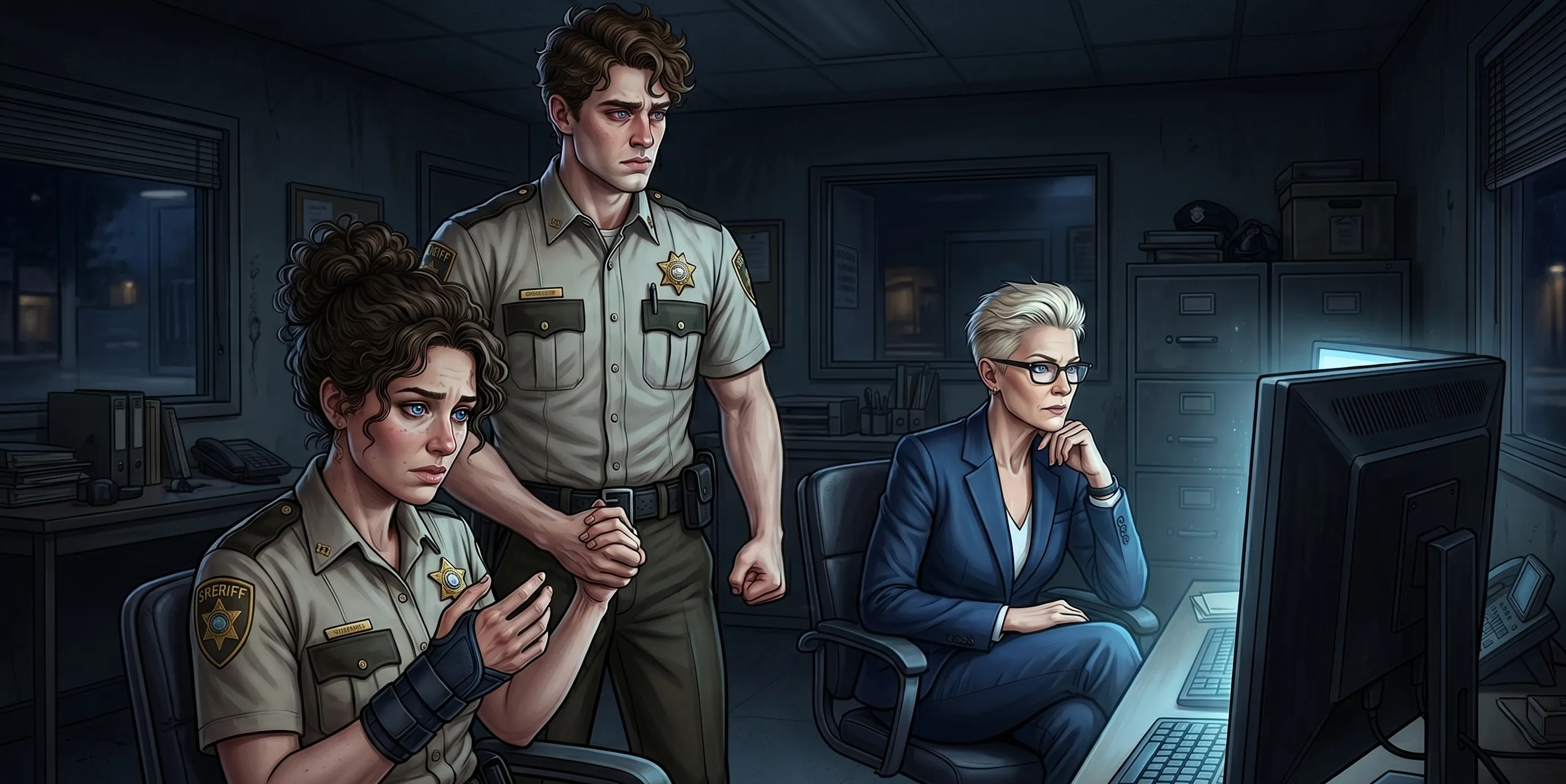
Twelve years later, the nightmare repeats itself. Another fourteen-year-old girl, Paisley Walker, is abducted while riding her bike on the backroads of Clifton County. The chilling similarities to the Dalrymple and Baker case force Emmy, now the Acting Sheriff following the tragic murder of her father, to reopen the closed investigation. To make matters worse, a popular true-crime podcast called “Misguided Angel” has recently cast doubt on the original conviction, resulting in the release of the man previously blamed for the murders.
In a desperate race against time, Emmy must navigate a web of small-town secrets, drug rings, and transactional sex that the original victims were entangled in. She is joined by Special Agent Jude Archer, a brilliant but abrasive FBI profiler who also happens to be Emmy’s biological mother. Together, they must confront the terrifying reality that the original killers—men who hid their sadistic predilections behind respected community roles—have been hiding in plain sight. We Are All Guilty Here is a relentless thriller that promises breathless tension from the first page to the last.
💡 Key Takeaways & Insights
- The Burden of Generational Secrets The Clifton family is built on a foundation of lies, specifically surrounding Jude’s true identity as Emmy’s biological mother. The narrative proves that attempting to protect a family through deception only breeds deeper dysfunction.
- The Monster in Plain Sight The novel brilliantly subverts the “trusted mentor” trope. Predators like Virgil Ingram and Dr. Walton Huntsinger use their respected occupations and community status as a shield to mask pure evil, proving that the most dangerous threats often come from those who wield authority that is uncomfortable to challenge.
- The Physicality of Trauma Slaughter excels at showing how trauma stores itself in the body. Emmy’s paralyzing guilt and her “fight, flight, or freeze” responses anchor the story in a gritty psychological reality, making her procedural missteps and triumphs feel deeply relatable.
- Grief as a Destructive Force Through the dissolution of Emmy and Jonah’s marriage, and then Hannah and Paul’s marriage, the book highlights how unprocessed grief and ambiguous loss can curdle into toxicity, ultimately destroying lifelong friendships and leading to deadly violence.
🤯 The Most Interesting or Unexpected Part
The most shocking moment occurs early on when Emmy pulls the bodies of Madison and Cheyenne from Aunt Millie’s pond. The initial setup heavily implies a standard rescue mission where the detectives race against a 24-hour ticking clock to find the kidnapped girls alive. Finding them brutally murdered so early in the narrative is a massive gut punch that completely shatters expectations, instantly pivoting the novel from a standard rescue thriller into a decades-spanning exploration of inescapable grief and trauma.
🏛️ How This Book Applies to Real Life
- True-Crime Media Ethics Jack Whitlock’s “Misguided Angel” podcast mirrors the real-world phenomenon of amateur sleuths manipulating facts for entertainment and fame. The podcast’s interference directly results in a dangerous man being freed, serving as a sharp critique of how the true-crime ecosystem often forgets the actual victims in pursuit of a compelling narrative.
- Victim Blaming and Patriarchal Hypocrisy Elijah Walker’s reaction to his daughter's disappearance reflects the damaging real-world tendency to blame victims for what has happened to them. He attempts to rationalize Paisley’s abduction on her choice to wear tight shorts, projecting the fault onto a fourteen-year-old girl instead of the man who actually abducted her. This hypocrisy is further highlighted by the fact that he rigidly polices his daughter's modesty while secretly engaging in his own illicit affairs.
- The Illusion of Teenage Control Cheyenne and Madison’s tragic fate reflects the real-world danger of adolescents engaging in risky, adult behaviors under the false belief that they are in charge. The girls attempt to use blackmail, drug dealing, and transactional sex as tools to fund their independence, failing to realize they are actually being groomed and manipulated by dangerous predators. Their storyline serves as a chilling reminder that teenagers lack the life experience to understand when they are being preyed upon by sadistic adults who hold all the real power.
Who should read We Are All Guilty Here?
- Readers who appreciated the dark, gritty atmosphere and complex female protagonist in Sharp Objects will love the Southern Gothic procedural elements of this book.
- Fans of meticulous, character-driven thrillers that prioritize psychological depth over cheap thrills.
- Anyone who values raw explorations of trauma, grief, and the devastating ripple effects of buried family secrets.
📚 Final Rating
3.9 / 5 stars
The execution, pacing, and character development are masterful, making it a standout in the Southern thriller genre. However, the incredibly graphic and disturbing nature of the child torture and abuse makes it a remarkably heavy read that is difficult to revisit.
🎯 Should you read it? Maybe. Readers looking for a brilliant, unyielding thriller will be satisfied, provided they are prepared to stomach highly distressing and graphic thematic material regarding violence against minors.
🔥 Final Thought We Are All Guilty Here is a breathless, devastating reminder that the most terrifying monsters aren’t hiding in the dark—they are smiling at us in the daylight.
Discussion Topics
- Small-Town Complicity and Willful Blindness The title of the book implies a shared responsibility for the tragedies that occur in North Falls. Many characters, from the parents to the police force, overlook obvious warning signs regarding Cheyenne and Madison’s illicit activities and the predators surrounding them.
Discussion Questions: How does the culture of North Falls contribute to the girls’ demise? In what ways do characters like Alma Huntsinger and Esther Loudermilk represent willful blindness? Do you agree with the book’s premise that the entire community bears some guilt for what happened?
- The Burden of Family Legacy and Secrets The Clifton family is deeply respected in the county, yet they harbor massive generational secrets, including the truth about Emmy’s biological mother, Jude, and Gerald’s past alcoholism.
Discussion Questions: How did the decision to hide Jude’s true identity impact Emmy’s development as an adult? In what ways does Emmy’s son, Cole, represent a breaking of these generational curses? Did Gerald Clifton achieve redemption by the end of his life, or do his past mistakes overshadow his good deeds?
- The Impact of True Crime Media Jack Whitlock’s podcast, “Misguided Angel,” plays a pivotal role in the narrative by freeing Adam Huntsinger and casting doubt on the original investigation.
Discussion Questions: How does Jack’s character serve as a critique of modern true-crime podcasting? What are the real-world dangers of amateur sleuths interfering in closed cases, as depicted in the book? Did the podcast ultimately help uncover the truth about Virgil and Walton, or did it only cause unnecessary pain and violence?
Discussion
Comments are moderated and will appear after review by the site owner.
No comments yet. Be the first to share your thoughts!