📖 Introduction & Why This Book Matters
Set in a staggering “biopunk” empire constantly besieged by apocalyptic leviathans, The Tainted Cup is far more than just a murder mystery. It is a story that brilliantly marries the cozy, logical deduction of a Sherlock Holmes-style narrative with epic, Kaiju-scale grimdark fantasy. Beneath the grotesquely fascinating biological magic system lies a profound exploration of systemic rot, class inequality, and the heavy burden of duty. It forces the reader to ask a chilling question: when the walls of civilization are holding back literal monsters, what do you do when the people ruling from within those walls are even worse?
✍️ Plot Summary
In the outer rim of the Great and Holy Empire of Khanum, humanity’s existence is in a constant state of crisis. Its survival depends entirely on massive sea walls and elite legions holding back colossal, continent-destroying leviathans that rise from the ocean every wet season. Signum Dinios Kol, a magically altered “engraver,” possesses an infallible, perfect memory, serving as a living record for the Imperial Iudex. However, Din hides a secret: he suffers from a severe dyslexia-like condition, making reading nearly impossible. He serves as the assistant to Immunis Ana Dolabra, a brilliant, highly eccentric, and manipulative lead investigator who intentionally blindfolds herself to avoid the maddening sensory overload of the outside world.
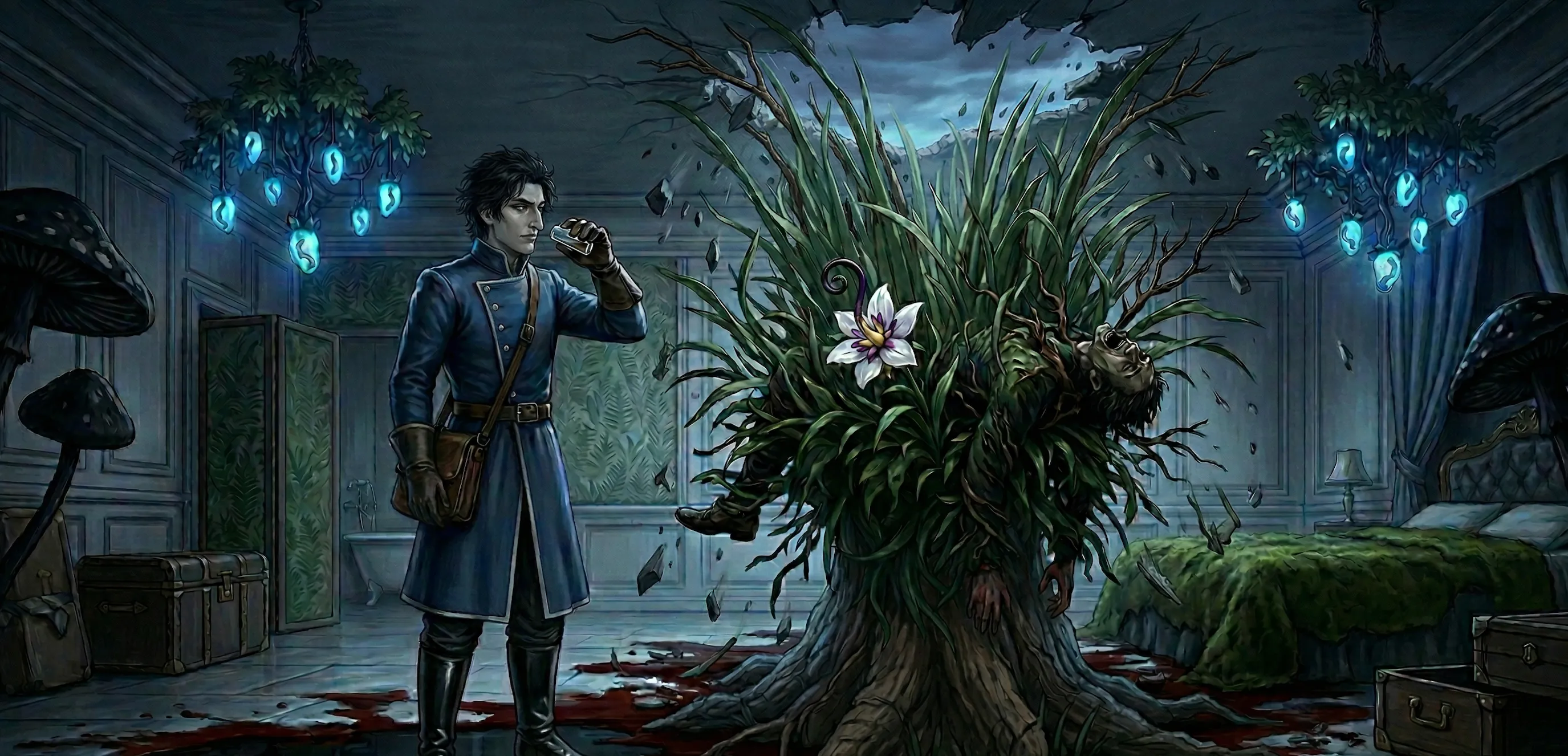
Their routine investigations into local fraud are shattered when Commander Taqtasa Blas, a high-ranking officer of the Imperial Engineers, is found dead inside the luxurious, heavily warded estate of the ultra-wealthy Haza clan in the canton of Daretana. The murder defies all logic: an enormous, rapidly growing tree has erupted violently from within the commander’s chest, freezing him in a silent scream. Ana quickly identifies the weapon as “dappleglass,” a fast-growing, weaponized botanical contagion that previously wiped out the entire canton of Oypat eleven years ago.
Before Ana and Din can unravel the mystery, the apocalyptic tocsin bells ring out across the canton. A leviathan has breached the seemingly impenetrable sea walls. Summoned to the heavily fortified engineering city of Talagray by the stern Commander-Prificto Vashta, the investigating duo discovers a horrifying truth: the walls did not fail from the outside. They collapsed because ten elite Engineers stationed on the fortifications were simultaneously poisoned, sprouting dappleglass trees from their bodies just like Commander Blas.
Realizing the single botanical murder in Daretana is the thread unraveling a civilization-threatening conspiracy, Ana and Din must navigate hostile military bureaucracy and deeply entrenched corruption. Joined by the gruff, heavily augmented Captain Miljin and the weary Immunis Uhad, Din must rely on his infallible memory—and a terrifying, hidden “muscle memory” combat knack—to survive ambushes and superhuman assassins. As a new leviathan churns toward the breached walls, the investigators race to connect a trail of blackened fernpaper, extortion money, and elite gentry plots before the Empire falls to ruin.
💡 Key Takeaways & Insights
- Systemic Corruption vs. Individual Duty Underneath the fantasy elements, the book emphasizes how the ultra-wealthy elite (the Haza clan) exploit laws to inflate their land values, happily sacrificing entire communities and bleeding common soldiers dry to protect their wealth.
- The Weaponization of Bureaucracy The author highlights how administrative red tape can be a tool of violence. The “Preservation Boards,” institutions meant to protect the environment, are manipulated by the wealthy to delay a life-saving dappleglass cure, committing passive genocide for profit.
- The Subversion of the Detective Trope Bennett breathes fresh life into the classic “Holmes and Watson” dynamic. “Watson” (Din) is the one with the superhuman memory and combat reflexes, while “Sherlock” (Ana) relies on blinding herself to process information.
- The Crushing Weight of Memory Through Din and the tragic villain Immunis Uhad, the book explores the psychological toll of possessing a perfect memory. Remembering every unpunished injustice can eventually weigh on the mind, twisting a desire for righteousness into monstrous vigilantism.
🤯 The Most Interesting or Unexpected Part
One of the most brilliant and satisfying twists is the revelation of exactly how the ten Engineers were poisoned simultaneously, which perfectly explains the book’s title. Ana and Din deduce that while Commander Blas was being assassinated in his bath via airborne dappleglass spores, the toxins were doing double duty. As the steam carried the spores into Blas’s lungs, it also settled upon his bejeweled wine ewer. When the Hazas later used that same "tainted cup" to serve wine at a clandestine gathering of the Commander’s inner circle, they unwittingly turned a solitary hit into an assassination of ten other engineers. This single contaminated vessel became the bridge between a personal vendetta and the catastrophic collapse of the sea walls.
🏛️ How This Book Applies to Real Life
- Systemic Corruption and Exploitation: The Haza clan’s manipulation of the dappleglass cure to inflate their land values closely mirrors real-world corporate greed. It reflects how powerful entities will sometimes suppress life-saving interventions, medications, or technologies, sacrificing vulnerable communities to maintain their own wealth and market dominance.
- Accountability and Bureaucratic Violence: The Empire’s Preservation Boards intentionally bogged down the deployment of a vital cure with endless administrative reviews and environmental studies. This mirrors how real-world bureaucratic red tape and weaponized regulations can cause passive but devastating violence against marginalized groups.
Who should read The Tainted Cup?
- If you liked the intricate, logic-based magic systems in Brandon Sanderson’s works or the grim, monstrous worldbuilding of China Miéville, then you will love the biopunk aesthetics and rigorous internal consistency of The Tainted Cup.
- Readers who appreciate slow-burn, character-driven fantasy paired with intricate murder mysteries.
- Anyone who loves explorations of trauma, systemic injustice, and fresh takes on the classic detective duo.
📚 Final Rating
4.3 / 5 stars
While the complex political structures and tricky character names make it slightly difficult to follow (especially on audiobook), the phenomenal worldbuilding, gripping mystery, and Din’s steady character growth make it an incredibly rewarding read.
🎯 Should you read it? Yes, but know what you are getting into. It is not an introductory, fast-paced, action-packed fantasy; readers must be prepared for dense worldbuilding, heavy procedural bureaucracy, and intricate political plotting.
🔥 Final Thought When the true monsters wear fine silks and manipulate the laws, doing the right thing becomes the most terrifying—and vital—act of all.
Discussion Topics
- The Burden of Alterations In the Empire, individuals undergo “suffusions” and “alterations” to serve specific roles, such as Din’s perfect memory or the Cracklers’ massive strength. However, these come with severe physical and mental costs, including sterility, shortened lifespans, and psychological breakdowns.
Discussion Questions: How does the Empire’s use of biological alterations reflect real-world expectations placed on specialized workers or soldiers? Did Din’s unique combination of a perfect memory and his dyslexia-like condition make him a better or worse investigator? Is the Empire justified in demanding such devastating physical sacrifices from its citizens to hold back the leviathans?
- The Anatomy of Corruption The disaster in Oypat and the subsequent murders were not caused by a dark lord or an evil god, but by wealthy landlords (the Hazas) utilizing administrative red tape (the Preservation Boards) to block a cure and inflate land values.
Discussion Questions: How did the bureaucratic nature of the villainy change your perception of the story’s antagonists? Immunis Uhad orchestrates mass murder out of a twisted, desperate desire for justice against this untouchable corruption. Do you sympathize with his despair, even if his methods were horrific? How does Captain Strovi’s perspective—that the Empire is worth saving because of the frontline people holding the walls—contrast with the corruption at the top?
- The Holmes and Watson Dynamic Bennett intentionally subverts classic detective tropes. Ana Dolabra, the genius investigator, blindfolds herself to avoid the world and relies entirely on Din, her physically capable, perfectly remembering, but deeply inexperienced assistant.
Discussion Questions: How does Ana’s sensory aversion shape her investigative methods compared to traditional literary detectives? Din is hired explicitly because he proved his resourcefulness by breaking the rules and cheating on his exams. What does this reveal about Ana’s worldview and her approach to Imperial law? How does their dynamic and power balance shift after Din’s lethal “muscle memory” combat skills are revealed during the ambush?
Discussion
Comments are moderated and will appear after review by the site owner.
No comments yet. Be the first to share your thoughts!