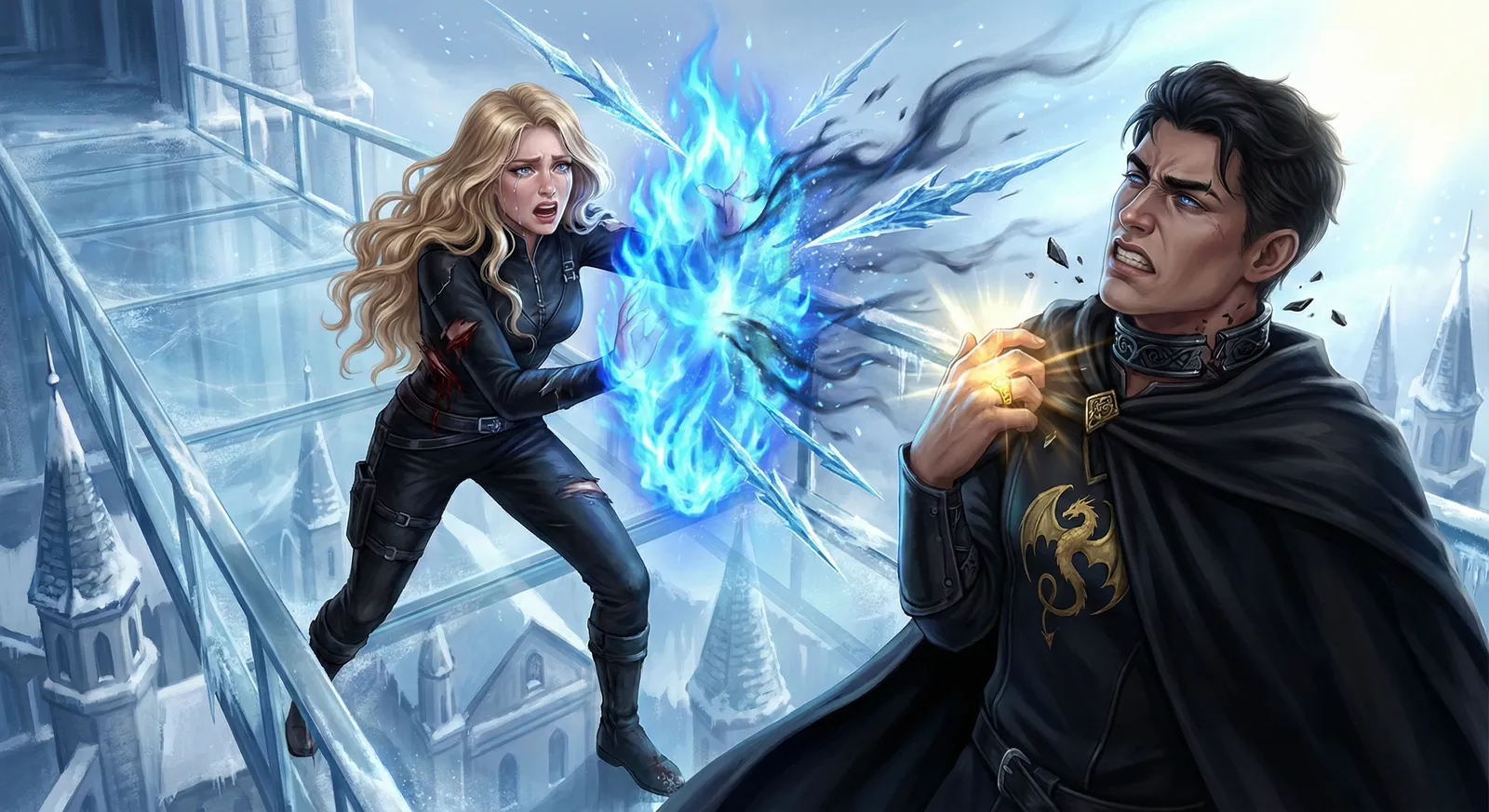
📖 Introduction & Why This Book Matters
Queen of Shadows is a profound exploration of identity, trauma, and the arduous journey of “coming back” from the darkness, delivered through a fantasy novel about assassins and magic. While the plot drives forward with high-stakes rescues and city-shattering magic, the soul of the book lies in its treatment of loyalty and the definition of a monster. It asks the reader to consider if one can remain human after enduring—and committing—unspeakable acts. This installment serves as a pivotal turning point in the series, shifting the narrative scope from a personal vendetta to a war for the soul of a kingdom. It matters because it dismantles the trope of the solitary hero, proving that even the most powerful queens need a court—a family—to survive.
✍️ Plot Summary
Aelin Galathynius has returned to Rifthold, but she is no longer the broken girl who was sent to the salt mines. She is the Queen of Terrasen, and she has come to raise hell.
Upon her arrival, Aelin discovers that her cousin, General Aedion Ashryver, has been imprisoned by the King of Adarlan. His execution is scheduled to take place during the Crown Prince’s birthday celebrations—a brutal trap designed to lure Aelin out of the shadows. To save him, she must navigate the deadly underbelly of the capital, partnering with her deceptive former master, Arobynn Hamel, the King of the Assassins.
Meanwhile, in the dark mountains of Morath, Manon Blackbeak, Wing Leader of the Ironteeth witches, finds herself questioning the blind obedience demanded by her grandmother and the Duke. As the King’s dark forces gather and ancient Valg demons infiltrate the city guards, the fate of the continent hangs in the balance. With magic still suppressed by the clock tower and her enemies closing in, Aelin must execute the most dangerous scheme of her life to save her cousin, her friend Prince Dorian, and her kingdom.
💡 Key Takeaways & Insights
1. We get to come back from the darkness The most powerful thematic undercurrent of the book is the concept of redemption and recovery. Aelin’s plea to Dorian Havilliard—that “we get to come back”—is the emotional anchor of the story. It suggests that trauma and past atrocities do not have to be the end of a person’s story. Whether it is Aelin recovering from her past as Celaena, or Dorian fighting the Valg prince occupying his mind, the narrative insists that people are allowed to return to life, to start again, and to overcome terrible things.
2. Loyalty is a choice, not a chain The novel contrasts forced servitude with chosen loyalty. The King’s soldiers are enslaved to Valg demons with rings and collars, stripped of their will. In contrast, Aelin’s court—Rowan, Aedion, and Lysandra—serve her out of love and mutual respect. Even Rowan, who was once bound by a blood oath to Queen Maeve, finds a new, deeper devotion to Aelin that transcends magical bonds. The story posits that the strongest alliances are those entered into freely, where friends come back for one another simply because they are loyal and because they love each other.
3. Monsters are made, not born This theme is explored vividly through Manon Blackbeak. Raised to be a soulless killer, Manon begins to crack under the realization that her cruelty was manufactured by her grandmother’s abuse and the harsh laws of the Ironteeth. Through her interactions with the human Elide and her second-in-command Asterin, Manon grapples with the idea that she was “made” into a monster, and that she possesses the agency to unmake herself and choose a different path.
4. The transformative power of small kindnesses While Aelin orchestrates grand schemes, it is often small acts of mercy that change the course of fate. Aelin saving Manon’s life at the bridge leads to Manon telling Aelin that Dorian still lived inside the Valg prince, allowing Aelin to save his life. Similarly, Aelin's decision to give Kaltain a warm cloak in a cold cell years prior motivates Kaltain to entrust Elide with the Wyrdkey to return to her. These ripples of kindness in a brutal world ultimately provide the keys to victory, quite literally in the case of Kaltain passing the stone to Elide.
🤯 The Most Interesting or Unexpected Part
The most shocking twist is the arc of Kaltain Rompier. Initially presented in previous books as a shallow courtier, she is revealed here to be a weapon of terrifying power. Imprisoned in Morath and experimented upon, she does not break; instead, she bides her time, secretly cultivating the magical shadowfire in her veins. In a stunning act of agency, she consumes the Valg demon inhabiting her, and then blows up a third of the Morath stronghold, incinerating the Valg, the overseers, and herself to buy Manon and the Thirteen time to save Elide Lochan. Her transformation from a pawn into a destructive force is a breathtaking subversion of expectations.
🏛️ How This Book Applies to Real Life
Queen of Shadows resonates deeply with themes of trauma recovery and the importance of a support system. It illustrates that healing is not a linear line but a messy fight that is easier won with allies.
Who should read Queen of Shadows?
- Survivors of Trauma: The book deals heavily with PTSD and the reclamation of self after abuse.
- Fans of Complex Anti-Heroes: Aelin and Manon are morally gray characters who make difficult, sometimes ruthless choices.
- Strategists: Readers who enjoy “elaborate schemes” and watching a complex plan unfold will appreciate Aelin’s intellect.
📚 Final Rating
4.6 / 5 Stars. This book is a masterpiece of plotting and character development. It expertly balances high-octane action sequences—like the rescue of Aedion and the destruction of the glass castle—with deep emotional beats, such as Aelin’s visit to Sam’s grave and the forging of her new court. The intricate schemes Aelin executes to outwit Arobynn and the King demonstrate a narrative sophistication that makes this a standout installment.
🎯 Should you read it? Yes. It is a pivotal, game-changing book in the series that transforms the protagonist from an assassin into a queen and significantly expands the world-building. It’s the first time in the series that readers get to experience Aelin’s brilliant schemes, which are thoroughly entertaining.
🔥 Final Thought: Queen of Shadows moves beyond simple vengeance to reveal that while grand schemes may topple tyrants, it is the transformative power of small kindnesses that truly saves souls—proving that no matter how deep the darkness, we get to come back.
Discussion Topics
- The Duality of Identity: Celaena Sardothien vs. Aelin Galathynius Throughout the book, the protagonist struggles to balance her dark past with her royal future. She explicitly tells Chaol that "Celaena Sardothien doesn't exist anymore" and that she is now Aelin. Yet, returning to Rifthold forces her to put on the assassin's mask one last time to deal with her former master, Arobynn Hamel.
Discussion Questions: How do characters like Chaol and Arobynn react differently to her evolution from an assassin to a queen? Discuss Aelin's internal conflict—how does returning to the Assassins' Keep and donning her old suit help her finally lay the ghost of Celaena to rest so she can embrace her destiny as the Queen of Terrasen?
- The Definition of a "Monster" and the Gray Areas of Morality The concept of being a monster is a major recurring theme. Chaol fears Aelin's immense power and ruthless methods, at times viewing her as a monster who is a danger to the kingdom. Aelin herself accepts that she will gladly play the role of a monster if it means protecting her friends and family. Parallel to this, Manon Blackbeak is haunted by the accusation that the Ironteeth witches were "made into monsters," leading her to question her grandmother's brutal orders and eventually risk her life to save Elide.
Discussion Questions: Where does the book draw the line between necessary ruthlessness and true evil? How do Aelin’s and Manon’s journeys mirror each other as they both decide what kind of leaders they want to be?
- Forgiveness, Survival, and Unlikely Sisterhood One of the most powerful dynamics in the story is the evolving relationship between Aelin and Lysandra. They grew up as bitter rivals under the control of Arobynn and Clarisse, clawing for survival and favor. However, once they learn the truth about the abuses they both suffered—and Aelin discovers Lysandra's secret of being a shape-shifter—they forgive each other and forge an unbreakable bond.
Discussion Questions: How does overcoming their past grievances impact both women's survival and ultimate liberation? Discuss the significance of Aelin entrusting Arobynn's demise to Lysandra, and how Aelin offering Lysandra her own territory and title symbolizes their new, chosen family.
Discussion
Comments are moderated and will appear after review by the site owner.
No comments yet. Be the first to share your thoughts!