📖 Introduction & Why This Book Matters
At its core, House of Earth and Blood is an urban fantasy that masquerades as a gritty murder mystery, but its true beating heart is an exploration of unconditional love and survival. It strips away the traditional “chosen one” fantasy tropes to focus on a flawed, grieving young woman who uses a shallow, party-girl exterior as armor against a world that views her as disposable. This book matters because it tackles the messy, ugly reality of survivor’s guilt. It reminds us that resilience isn’t always about wielding a magical sword; sometimes, true bravery is just deciding to keep living after your world has been shattered.
✍️ Plot Summary
Bryce Quinlan is a half-Fae, half-human “party girl” living her best life in the vibrant, magic-fueled metropolis of Crescent City. By day, she works as an assistant to an intimidating antiquities dealer, but by night, she rules the clubs alongside her fiercely loyal best friend, Danika Fendyr, the Alpha of the elite shifter unit known as the Pack of Devils. Bryce’s carefree existence is violently ripped away when she returns home one night to find Danika and the entire pack brutally slaughtered by a terrifying kristallos demon. The devastating loss shatters Bryce, leaving her an isolated, hollow shell of her former self.
Twenty-two months later, the nightmare resurfaces when a wealthy vampyr is found murdered in the exact same gruesome manner as Danika’s pack. Believing the killings are tied to the recent theft of a sacred, ancient Fae relic known as Luna’s Horn, the city’s tyrannical ruler, Archangel Micah Domitus, orders an immediate investigation. To ensure she complies, Micah forces Bryce to team up with Hunt Athalar, a notoriously lethal Fallen angel known as the Umbra Mortis. Hunt is an enslaved assassin, forced to carry out Micah’s brutal wet work to slowly pay off a debt incurred after he led a failed rebellion against the ruling class two centuries ago.
Despite their initial hostility and opposing worldviews, Bryce and Hunt must navigate the dangerous, shadowy underbelly of Crescent City to catch the killer. Their investigation forces them to interrogate fanatic human rebels like Philip Briggs, consult with the lethal Viper Queen, and seek information from Tharion Ketos, a charismatic mer captain. As they follow the bloody trail, they uncover a sprawling conspiracy surrounding a highly addictive and volatile new drug called “synth”—a synthetic magic that grants users unearthly power but drives them to psychotic, self-mutilating violence. With the clock ticking toward a high-stakes political Summit, Bryce and Hunt must confront their own deeply buried traumas, battling a rigid, classist hierarchy to stop a killer who threatens to unleash literal Hell upon their city.
💡 Key Takeaways & Insights
- Grief is a form of love Bryce’s profound depression and her refusal to engage in the things that once brought her joy—like dancing—demonstrate how deeply she loved Danika. Her lingering pain is a testament to the fact that her loyalty transcends death.
- The illusion of a “perfect” victim Bryce constantly leans into the world’s perception of her as a vapid, shallow party girl to hide her brilliant mind and fierce protectiveness. She proves that heroism does not require a pristine reputation.
- Redemption through shared trauma Hunt and Bryce are both outcasts broken by the loss of their loved ones. They do not “fix” each other magically, but rather find redemption and a new reason to fight by understanding and validating each other’s profound suffering.
🤯 The Most Interesting or Unexpected Part
The most thrilling and unexpected twist of the novel revolves around Archangel Micah Domitus and the ensuing showdown in the gallery library. While Micah initially presents himself as a harsh but necessary authority figure, he is actually the primary antagonist who orchestrated the entire conspiracy. He secretly funded the synth trials and deliberately leaked the drug onto the streets. Knowing Danika’s fiercely protective nature would drive her to confiscate the dangerous drug, he waited until she had secured a crate of it, then caught her in the act and used it to blackmail her into stealing Luna's Horn for him. However, Danika realized Micah intended to use the synth to repair the shattered Horn and open portals to amass a demonic army, so she hid the artifact to stop him. In retaliation for hiding the Horn, Micah ambushed her apartment and injected Danika with a massive dose of synth, driving her into a frenzy that caused her to slaughter her pack and herself.
The tension explodes when Micah ambushes Bryce in the library, revealing his role in the murders and demanding she hand over the Horn so he can finally open the portals. Bryce desperately fights back, shielding herself with ancient magical books and even diving into a monster-infested aquarium to save her pet chimera, Syrinx. However, the most incredible moment occurs when Bryce's bubbly friend, the fire sprite Lehabah, sacrifices her own life by shattering the massive water tank to stall the Archangel.
Lehabah's ultimate self-sacrifice buys Bryce the crucial seconds she needs to assemble the legendary Godslayer Rifle, shoot Micah through the head, and cleave him in two with Danika's sword. She then burns his remains with gasoline. The absolute wildest part of this climax is that the entire brutal confrontation is secretly broadcast live via security feeds to the Vanir leaders at the Summit, who watch in stunned disbelief as Bryce casually pulls out a vacuum cleaner and vacuums up the Archangel's ashes.
🏛️ How This Book Applies to Real Life
Systemic Racism and Classism: The societal structure of Midgard mirrors real-world caste systems and systemic inequality. The magical Vanir endlessly oppress humans and “Lower” creatures, treating them as disposable commodities or literal slaves (like the Fallen angels and sprites). The ruling Asteri maintain their absolute power by pitting these factions against each other, showing how tyrannical regimes weaponize class divisions to prevent unified uprisings.
Trauma and Avoidance: Bryce’s struggle with PTSD is a painfully realistic depiction of survivor’s guilt. Following Danika’s death, Bryce abandons her passion for dancing and isolates herself from her remaining friends. Her journey reflects how trauma survivors often punish themselves, believing they do not deserve to experience joy when their loved ones cannot.
Who should read House of Earth and Blood?
If you liked the intricate political maneuvering and deep lore in A Court of Thorns and Roses or A Court of Mist and Fury, then you will love the complex world-building and high-stakes mystery about House of Earth and Blood.
- Readers who appreciate slow-burn, character-driven fantasy over fast-paced action.
- Fans of modern-day urban fantasy who enjoy seeing modern technology seamlessly blended with ancient, magical worlds.
- Anyone who loves explorations of trauma, resilience, ride-or-die female friendships, and dismantling oppressive hierarchies.
📚 Final Rating
4.1 / 5 Stars
While the tragic, early death of a vibrant character like Danika is a tough pill to swallow, and Bryce can occasionally come across as bratty, the novel is undeniably gripping. The unique modern-urban fantasy setting, brilliant twists regarding Micah and Bryce’s royal Fae brother, and the immensely lovable supporting cast (especially Tharion, Lehabah, and Syrinx) make it a phenomenal read.
🎯 Should you read it? Yes. If you have the patience to navigate the heavy, info-dump-style world-building in the early chapters, the emotional payoff, rich character arcs, and explosive, tear-jerking climax are entirely worth the investment.
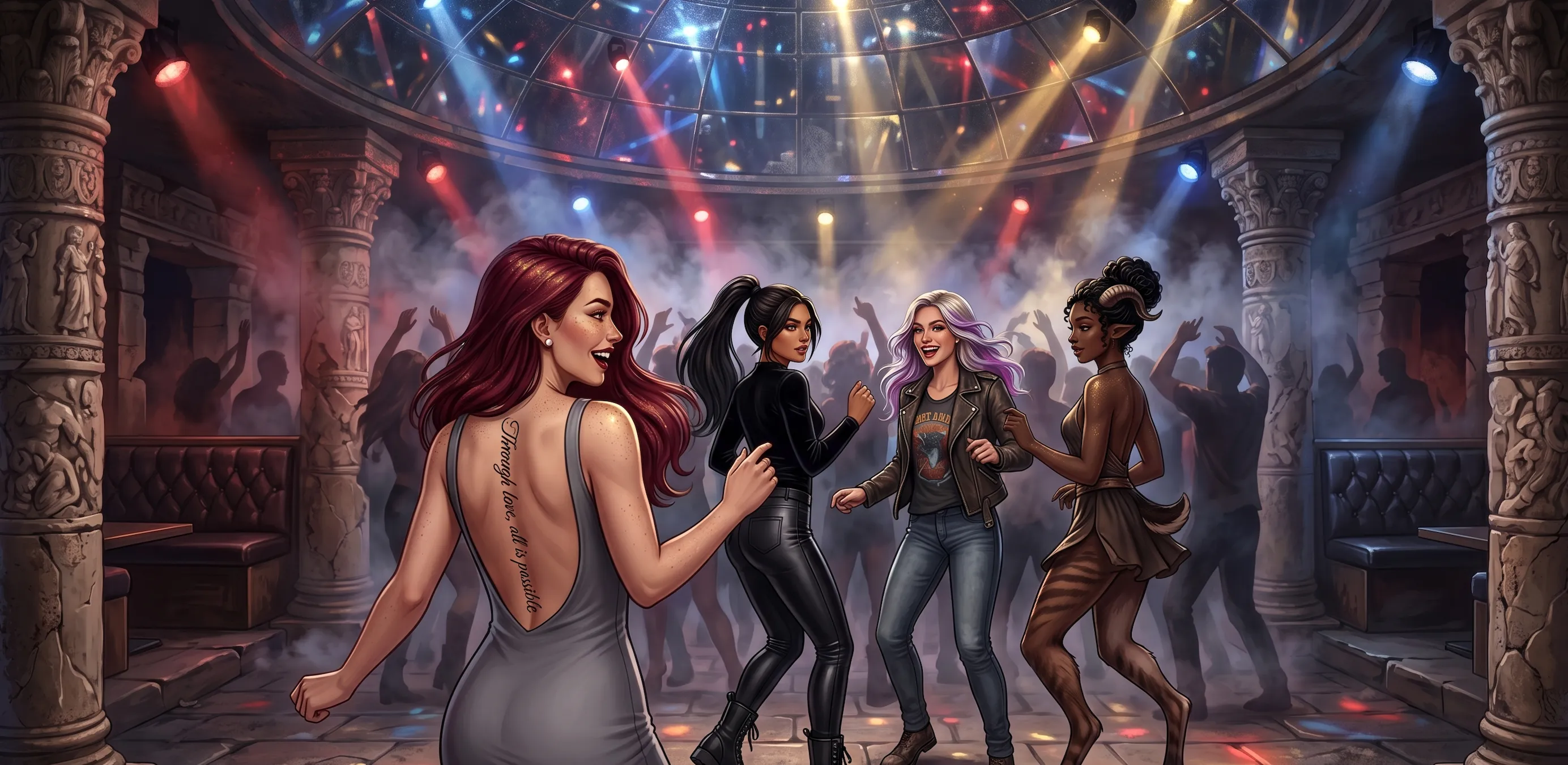
🔥 Final Thought In a brutal world dictated by ancient magic and cruel gods, House of Earth and Blood proves that the most indestructible force of all is a vow between friends: Through love, all is possible.
Discussion Topics
- Bryce’s Coping Mechanisms Following the slaughter of the Pack of Devils, Bryce abandons her dreams of dancing, shuts out her remaining friends, and leans into her reputation as a shallow party girl to keep people at a distance.
Discussion Questions: Why do you think Bryce feels the need to hide her intelligence and combat skills behind a frivolous exterior? How does Bryce’s refusal to heal her scarred leg physically manifest her survivor’s guilt? Do you think her friends, like Fury, were justified in pulling away from Bryce during her darkest moments?
- The Ethics of Rebellion Hunt Athalar led a failed rebellion that resulted in his enslavement, while the human rebel Philip Briggs resorts to fanatical terrorism and bombings to fight Vanir oppression.
Discussion Questions: How does the novel contrast Hunt’s past rebellion under Shahar with the modern-day terrorism of Philip Briggs? Does the oppressive, slavery-driven society of the Asteri justify the violent methods used by the human resistance? How does Hunt’s perspective on freedom and rebellion shift from the beginning of the novel to the end?
- Unconditional Loyalty and Sacrifice Danika secretly tattoos Luna’s Horn onto Bryce’s back to protect her, while the fire sprite Lehabah willingly sacrifices her own life to save Bryce and Syrinx from Micah.
Discussion Questions: Did Danika make the right choice in hiding the truth about the Horn and the synth drug from Bryce? How does Lehabah’s sacrifice challenge the Vanir society’s belief that “Lowers” and sprites are lesser beings? What does Bryce trading her eternal resting place in the Bone Quarter for Danika say about the novel’s overarching theme of love?
Discussion
Comments are moderated and will appear after review by the site owner.
No comments yet. Be the first to share your thoughts!