
Prythian is a brutal, intricately bound political system where survival hinges on hierarchy. Understanding the strict mechanics of its court structure is absolutely essential to comprehending the true stakes of the series. To read these books as a simple romantasy is to fundamentally miscalculate the nature of power in this universe.
What is a court — and what is a High Lord?
In Prythian, a court is a political territory, as well as a magical fiefdom governed by a High Lord — a being who does not just wield power, but is the physical incarnation of it. A High Lord’s magic is the absolute strongest within his respective court, intrinsically linking him to the land he rules. This connection is so profound that the magic and will of the Seasonal High Lords directly sustain the eternal spring, summer, autumn, or winter of their domains.
Furthermore, this supreme power is not acquired through democratic election or conquest; it is a bloodline birthright. However, the mantle of High Lord does not automatically pass to the eldest heir. Instead, the magic autonomously selects and shifts to the strongest offspring when the predecessor dies, frequently sparking cutthroat, lethal competition among siblings vying for the crown. Upon a High Lord’s death, this staggering, elemental power instantly passes to that chosen successor, ensuring the court is never left without its living anchor.
“The rigid, magic-bound hierarchy of the courts exposes a fundamental truth of Maas’s universe: power is not merely a political construct, but a predatory, elemental force that demands absolute submission.” The Obsidian Library
The seven courts
Each court occupies a distinct region of Prythian and is defined by its own climate, elemental magic, and political personality. Together they form a fractious, uneasy confederation — one that the war with Hybern temporarily united, and that the looming threat of Koschei may shatter again.
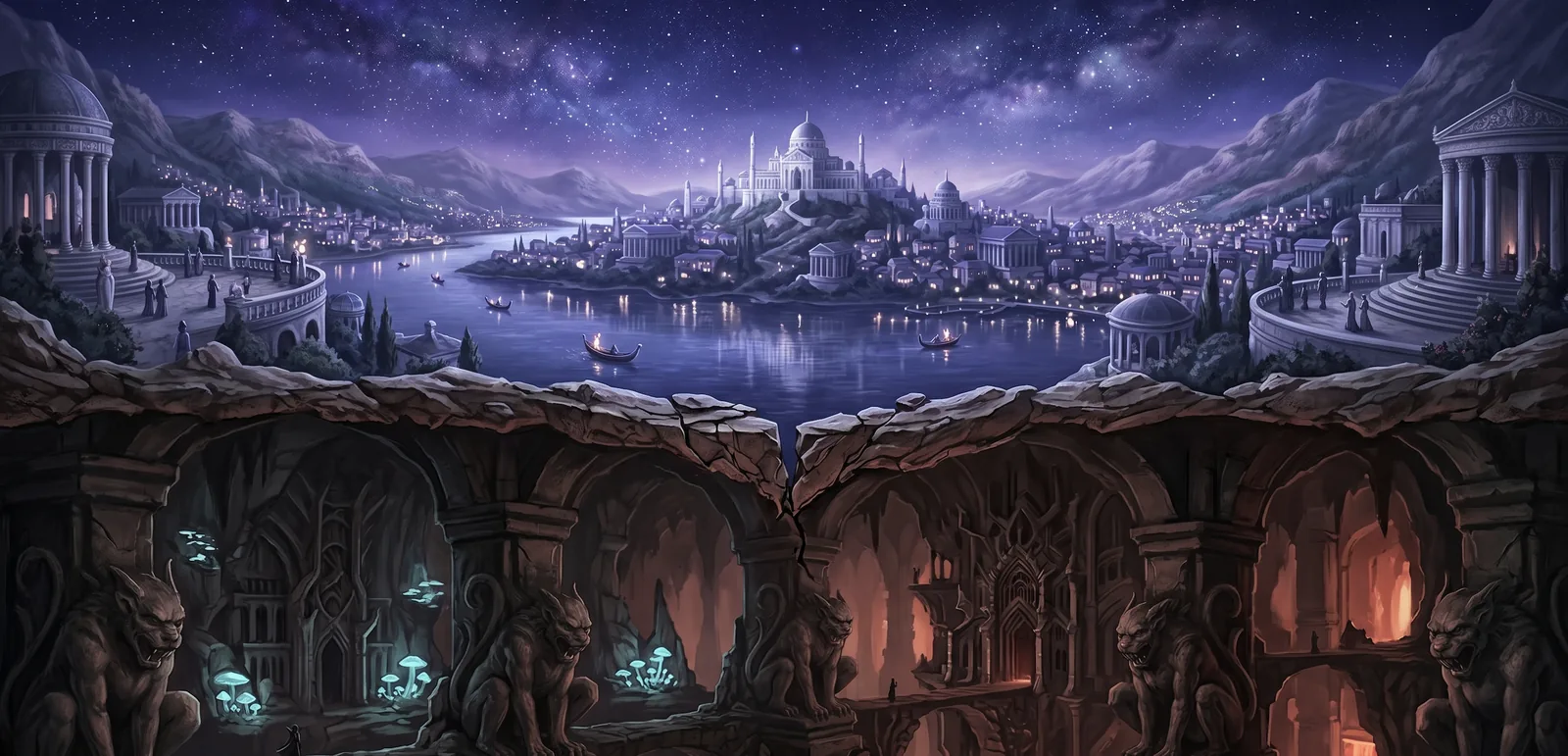
The largest and most powerful territory in Prythian, the Night Court is a realm defined by stark duality. On the surface, it projects the terrifying Court of Nightmares in the Hewn City — a subterranean society of cruelty, darkness, and ruthless political maneuvering. However, its true heart is Velaris, the City of Starlight, a hidden utopia of art, peace, and egalitarianism. Rhysand, the most powerful High Lord in history, rules alongside his equal, High Lady Feyre. Together with their Inner Circle, they subvert typical Fae hierarchies, valuing chosen family, compassion, and the protection of innocents above all. Rhysand wears the mask of a sadistic villain to the outside world, martyring his own reputation to ensure his people thrive in secret.
Serving as the primary setting from Book 2 onward, the Night Court is the strategic and emotional anchor of the series. It shifts the narrative from a simple survival tale to a sprawling political epic. The court serves as a sanctuary for healing trauma — not just for Feyre, but eventually for Nesta, Elain, and the priestesses in the House of Wind’s library. It drives the resistance against Hybern and Koschei, transforming from an isolated, hidden utopia into the radical vanguard of Prythian’s future, forcing the rest of the world to confront its outdated prejudices and borders.
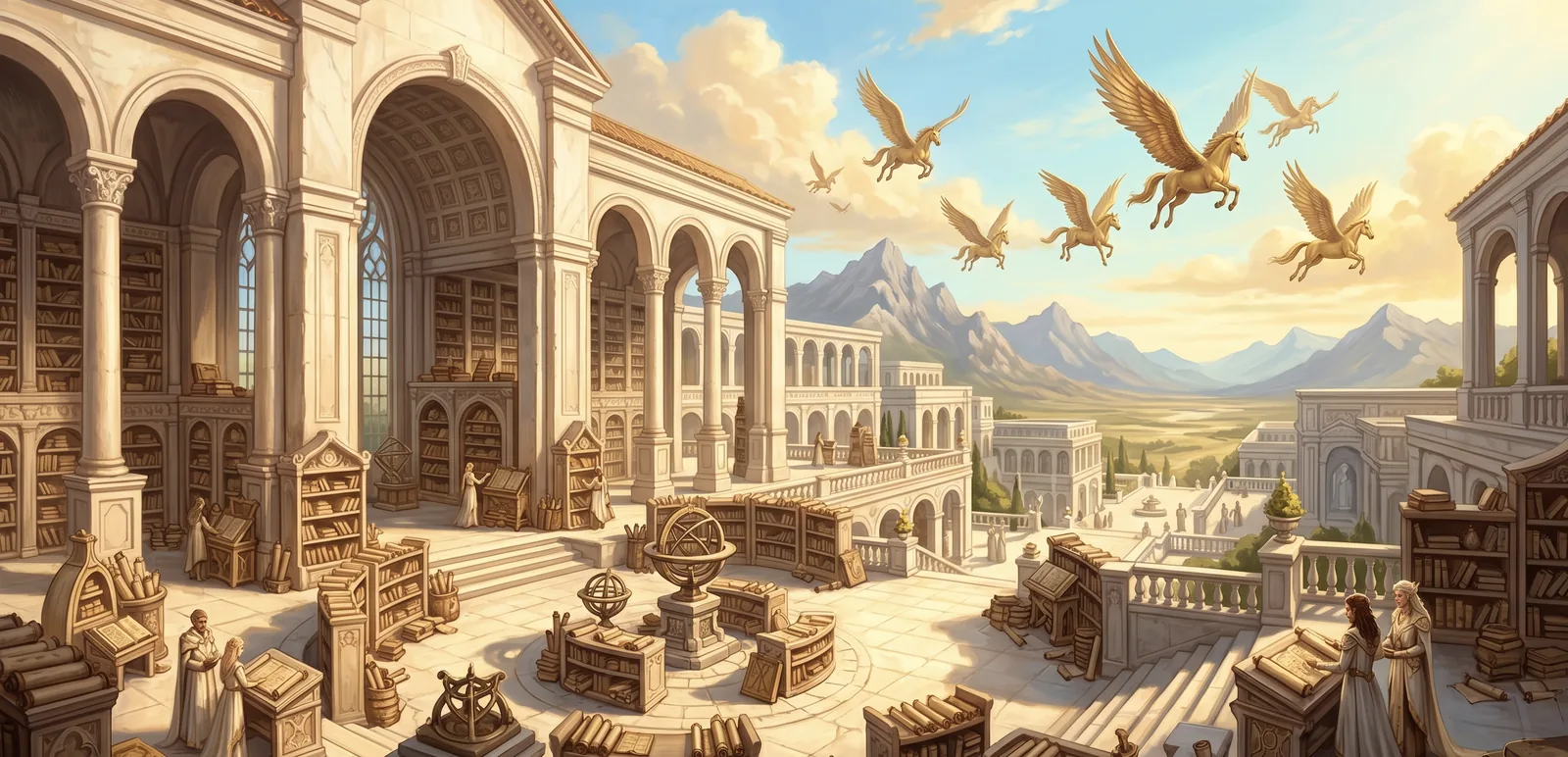
Characterized by unending, sun-drenched days, the Day Court is Prythian’s intellectual and magical epicenter. Known for its one thousand libraries and spell-cleaving magic, it was historically the continent’s greatest archive before Amarantha’s devastating looting. The court is governed by Helion Spell-Cleaver, a dazzling, swaggering High Lord whose flamboyant sensuality masks a lethal, cunning intellect. The culture is scholarly yet fiercely powerful, boasting rare pegasus mounts and unparalleled ward-breaking abilities. Helion’s deep, tragic history — specifically his doomed affair with the Lady of the Autumn Court and his unrecognized paternity of Lucien — adds a layer of profound sacrifice to his seemingly hedonistic rule. The Day Court stands as a primary, unwavering ally in the war against Hybern.

A beacon of healing and ingenuity, the Dawn Court is perched high in a mountain-palace made of sunstone, awash in the opalescent light of eternal sunrise. As one of the three Solar Courts, it serves as a neutral, diplomatic sanctuary, frequently hosting critical High Lord summits. Thesan leads with a polite, welcoming diplomacy, heavily reliant on his brilliant tinkerers, alchemists, and his elite Peregryn aerial legion. The court boasts a calm, intellectual culture, prioritizing innovation and mechanical advancement — such as forging faebane antidotes and mechanical prosthetics — over outright aggression. Thesan’s open devotion to his Peregryn captain lover underscores the court’s underlying foundation of quiet, unashamed authenticity, making Dawn an indispensable, stabilizing ally in the volatile political theater.

The Spring Court is defined by its verdant, idyllic landscapes, characterized by perpetual spring, blooming roses, and sun-dappled forests. Geographically bordering the human realm, it serves as Prythian’s first line of defense and initial crossing point. Culturally, it is deeply rooted in ancient traditions like the Great Rite and the Tithe, maintaining rigid class boundaries. The court’s identity becomes synonymous with Tamlin’s suffocating, territorial overprotectiveness. His governance fails as his desperate need for control eclipses his people’s needs, turning a haven into a gilded cage. Tamlin’s traditionalism and possessive nature ultimately alienate his allies and fracture his court from within, leaving his once-beautiful domain abandoned, ruined, and vulnerable to Hybern’s forces.

Radiating warmth, the Summer Court is a vibrant coastal territory centered around Adriata, a stunning castle-city crafted of shell-flecked walkways and sea glass chandeliers. Defined by its eternal summer, crashing seas, and rich maritime culture, the court thrives on trade and naval strength. Tarquin, the youngest High Lord, embodies a progressive, honorable spirit. Though constrained by ancient prejudices and the legacy of his predecessors, he harbors a quiet ambition to dismantle the rigid hierarchy and grant lesser faeries equal rights. This court represents hope for a more egalitarian Prythian, yet it is quickly battered by Hybern’s forces. Tarquin’s capacity for forgiveness and his steadfast morality remain its true, enduring foundation through the ravages of war.
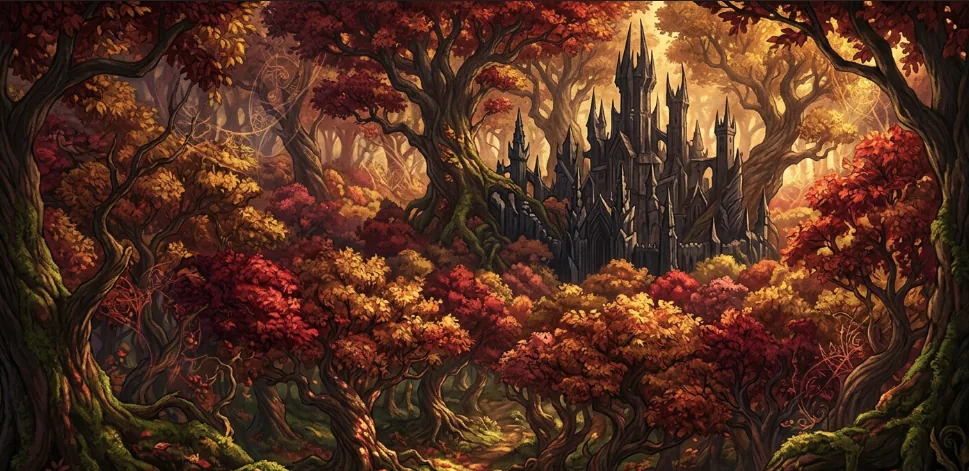
The Autumn Court is a breathtaking, jewel-toned landscape of perpetual autumn, filled with fiery foliage, crisp winds, and deep forests. Yet beneath its visual splendor lies a culture defined by cutthroat ambition, vicious rivalry, and systemic cruelty. Governed by the tyrannical and ancient High Lord Beron, the court is a den of vipers where power is seized through lethal sibling competition. The Autumn Court operates as a treacherous wild card in Prythian’s political landscape, with Beron perfectly willing to forge unholy alliances with enemies like Hybern or Briallyn to maintain his dominance. His heir, Eris, embodies this cunning, playing a highly dangerous double-agent game to quietly usurp his abusive father.

Shrouded in snow and glittering ice, the Winter Court is a formidable, isolated expanse of frozen lakes, biting winds, and pale, frost-covered mountains. Its people celebrate life vividly amidst the harsh climate, with legendary, boisterous winter festivals. Kallias, its High Lord, appears as cold and unyielding as a glacier, but possesses a deeply loyal and protective core, profoundly devoted to his mate, Viviane. The court’s culture relies on rugged survival and features armored white bears and fox messengers. Deeply scarred by Amarantha’s brutal massacre of their children in retaliation for an early rebellion, Winter operates with a fiercely defensive, closed-border mentality, strictly guarding its surviving people before reluctantly opening up to forge vital wartime alliances.
How power works — and how it can be broken
Prythian’s political architecture relies on strictly inherited, localized magic tied to ancient bloodlines. Feyre Archeron’s resurrection shatters this foundational law. By being Made through the simultaneous intervention of all seven High Lords, Feyre absorbed a “kernel” of each ruler’s magic. This mechanism transformed her into a singular political anomaly: a High Lady harboring the elemental arsenal of the entire continent.
This structural destabilization is magnified by Nesta, who bypasses the High Lords entirely. Rather than being granted magic, Nesta actively ripped “fistfuls of eternity” from the Cauldron during her Making, violently stealing its raw, death-infused power. Together, the sisters represent a terrifying paradigm shift. Feyre fractures the courts’ monopolized magic by consolidating it within herself, while Nesta proves Prythian’s primordial source can be usurped by sheer force of will. The old, rigid system simply cannot contain them.
Court allegiances — where they stood at the end of Book 5
| Court | Allegiance | Status entering Book 6 |
|---|---|---|
| 🌃 Night Court | Allied (Leaders) | Actively rebuilding post-war while secretly tracking the Dread Trove to neutralize Briallyn and Koschei. Rhysand and Feyre are also navigating the birth of their new son, Nyx. |
| 🌅 Dawn Court | Allied | Thesan remains a steadfast ally who provided sanctuary for the High Lord summit and manufactured the faebane antidote. His court remains a stabilizing, neutral force in Prythian. |
| ☀️ Day Court | Allied | Helion remains one of Rhysand’s closest allies. Though heavily involved in crafting the post-war treaty, he has been deliberately kept in the dark regarding the Night Court’s hunt for the Dread Trove. |
| ❄️ Winter Court | Allied | Kallias and Viviane maintain their alliance with the Night Court, having fully committed their armies to the war against Hybern after Amarantha’s atrocities. |
| 🌊 Summer Court | Allied | Tarquin officially rescinded his blood feud and fought alongside the Night Court. Their relationship has tentatively healed, though Tarquin is unaware of the looming conflict involving Koschei. |
| 🌷 Spring Court | Fractured / Neutral | Entirely vulnerable and lawless. Tamlin roams the lands in his beast form, neglecting his borders while his manor is reclaimed by thorns and ruin. |
| 🍂 Autumn Court | Enemy / Secret Ally | High Lord Beron has secretly pledged his forces to Queen Briallyn. However, heir Eris operates as a covert double agent for the Night Court, feeding information to eventually usurp his father’s throne. |
What the court system means for Book 6
Prythian’s court system is the structural board on which the entire series plays, and the encroaching threat of Koschei will stress-test every alliance meticulously built across Books 2–5. The greatest instability entering Book 6 lies in the fractured southern and eastern borders. The Spring Court remains leaderless in all but name, its lands neglected and vulnerable while Tamlin roams in his beast form.
Concurrently, the Autumn Court operates as an active geopolitical threat; High Lord Beron has secretly pledged his forces to Briallyn, while his heir, Eris, plays a dangerous double agent to usurp him. If Koschei launches a terrestrial assault, these compromised courts will likely serve as the primary invasion routes, forcing the Night Court to intervene in hostile territories.
To survive, Prythian’s allied High Lords must navigate this rigid, failing hierarchy before the continent’s internal rot guarantees their shared destruction.
We maintain that Prythian’s court system is not mere fantasy background dressing, but the undeniable, roaring engine of the entire series. Grasping the ruthless mechanics of its magic and bloodlines reveals the true, terrifying stakes driving every political maneuver and battlefield sacrifice. To understand the courts is to fundamentally transform how you experience Maas’s universe, elevating a story of love and survival into a masterful, high-stakes geopolitical epic.