

Eris Vanserra is one of the most carefully constructed background characters in the series—given just enough page time to be damning and just enough ambiguity to make that damnation feel incomplete. While he is initially presented as a heartless prince of the Autumn Court, the closer you read his highly calculated political maneuvers, the less certain that guilty verdict becomes.
The family he was born into
To understand Eris Vanserra, one must first examine the brutal forge of his upbringing: High Lord Beron. Sarah J. Maas explicitly frames Beron as both a vicious tyrant and a political opportunist, a ruler perfectly willing to ally with Queen Briallyn to suit his sprawling ambitions. Under Beron’s absolute control, the Autumn Court is a lethal arena where sibling rivalry operates as a blood sport and weakness guarantees a death sentence. Beron’s systemic abuse of his family is detailed through his physical torment of his wife and his willingness to torture his own sons for information. Furthermore, Eris grew up watching his father execute those who defied him, actively participating in the punishment of his brother Lucien by forcing him to watch his lover’s murder. Consequently, Eris’s public cruelty is not an incidental character flaw, but a meticulously crafted survival strategy. In a court where his father ruthlessly eradicates any display of softness or vulnerability, Eris’s cold, arrogant facade operates as the essential armor keeping him alive.
The public persona vs. what’s underneath
Performs cruelty and indifference in every public setting.
But he has been feeding the Night Court intelligence at extreme personal risk. Eris acts as a covert double agent, passing along vital warnings about his father’s alliances and border vulnerabilities. The consequences of discovery are explicitly fatal: Rhysand confirms that if Beron uncovers the deception, “Eris’s head will roll.”
Abandoned Morrigan to die on the Autumn Court border.
But A Court of Silver Flames raises the possibility that this was not simple cruelty. When Cassian asks why Eris wants to overthrow his father, Eris explicitly replies, “For the same reason I left Morrigan untouched at the border.” Maas leaves Eris’s exact, unspoken motives ambiguous.
Never visibly defies Beron; performs filial loyalty in every public forum.
But he explicitly wants Beron dead and the Autumn Court throne. Eris outright tells Rhysand, “The request still stands… to just kill my father and be done with it,” offering to pledge his troops in exchange. By A Court of Silver Flames, he actively conspires with the Night Court to thwart his father’s alliance with Queen Briallyn to ensure he can seize power on his own terms.
Treats every interaction as a power play — cold, mocking, always positioned above the room.
But he maintains a consistent working alliance with the Night Court’s inner circle, especially Cassian and Azriel. Cassian collects the intelligence from Eris, and Azriel actively investigates it. Because Eris knows so many Night Court secrets, Azriel insists they must rescue Eris when he is captured by Briallyn. Azriel’s continued engagement implies that despite a five-hundred-year blood grudge, the spymaster recognizes Eris is a reliable, vital asset whose strategic value supersedes personal vengeance.
The evidence for the double agent
The text explicitly confirms Eris withholds vital intelligence from his father, Beron, prior to the war’s outbreak, using this leverage to forge a covert alliance with the Night Court. During a secret meeting in the Hewn City, Eris reveals he hid Feyre’s powers to prevent Beron from attacking them. In exchange for this silence and his ongoing espionage, Rhysand formally agrees to support Eris’s eventual bid to usurp the Autumn Court throne.
During the High Lord summit, Eris directly defies his tyrannical father by openly volunteering to take the Dawn Court’s experimental faebane antidote. Later, during the final battle, Eris and his brothers actively target and incinerate Hybern’s faebane supply wagons.
When Queen Briallyn mysteriously abducts a patrol of his soldiers, Eris shares the secret of his father’s alliance with Briallyn with Cassian. Unable to trust Beron, Eris leverages Night Court resources, hoping Azriel investigates and Cassian shares the intelligence. Eris risks his life by trusting Cassian—since only Eris knows of the alliance, any leak would expose his treason to Beron. Ultimately, Eris seeks to defend the Autumn Court and ensure this unholy alliance doesn’t jeopardize his meticulous succession plans.
A Court of Silver Flames explicitly suggests Eris possessed hidden motives for abandoning Morrigan at the Autumn Court border centuries ago, though the exact truth remains unknown. When Cassian demands why Eris wishes to usurp Beron, Eris replies it is for the “same reason” he left Mor untouched. He implies Mor herself now understands his actions, suggesting a complex reading where Eris intentionally severed their betrothal to grant Mor her freedom, incurring great personal cost.
His relationship with Nesta — and what it might mean
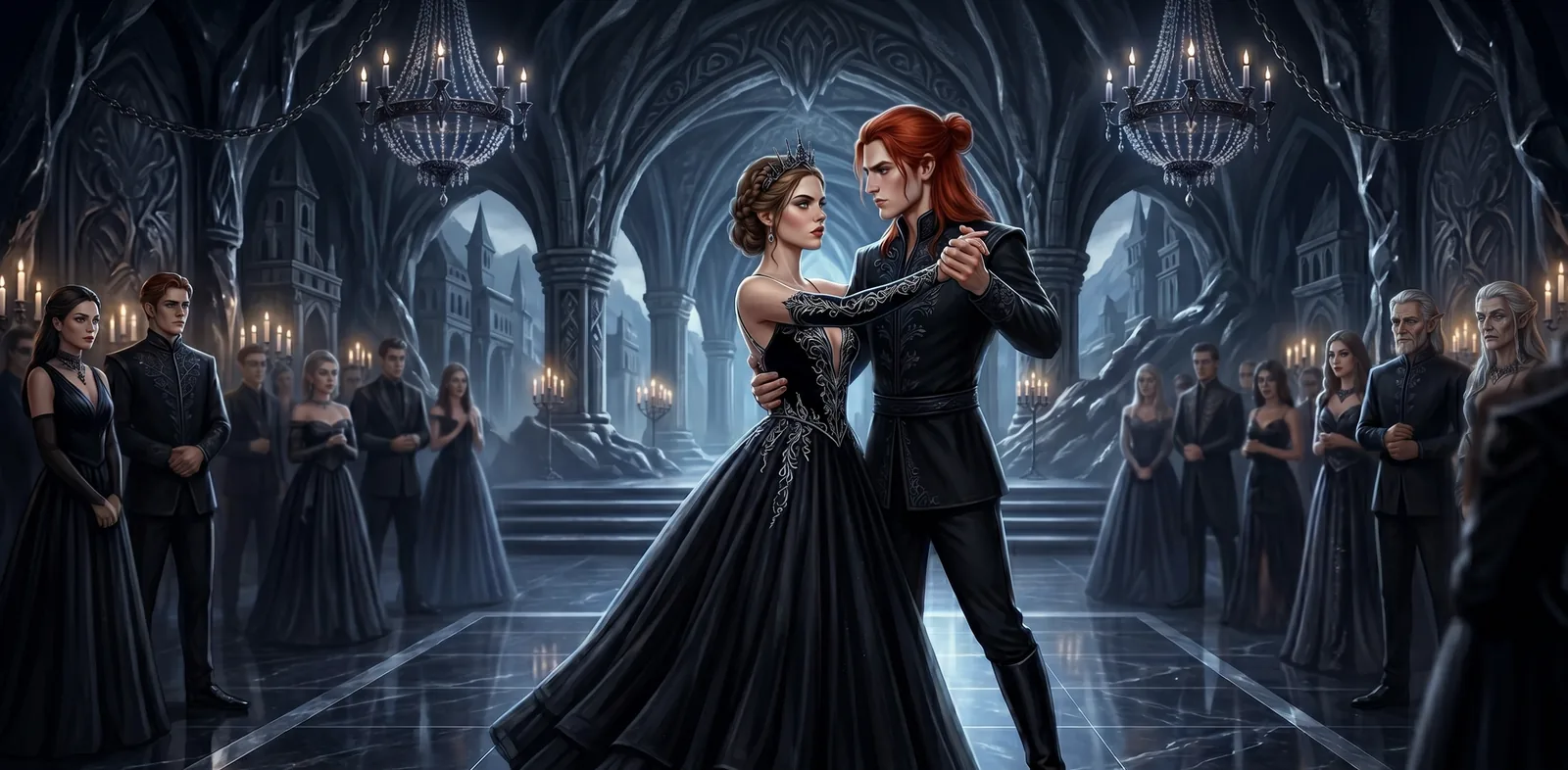
In A Court of Silver Flames, the dynamic between Eris and Nesta Archeron is built on recognition, not romance. While Eris formally proposes a marriage alliance to Rhysand and shares a highly charged waltz with Nesta at the Winter Solstice ball, the text frames their interactions as calculated political maneuvers rather than a genuine romantic arc. There is a compelling parallel between Eris’s survival strategy under Beron’s cruelty and Nesta’s own emotional armor, although Maas never explicitly compares their abusive upbringings. However, both characters were forged by parents who punished vulnerability, prompting them to adopt cold, aristocratic facades. When they dance, Eris recognizes Nesta’s courtly maneuvering—noting she “came to play the game”—because it flawlessly mirrors his own. Eris views Nesta’s ruthless power as a valuable political asset, while Nesta intentionally manipulates his vanity solely to secure his military allegiance for the Night Court. They do not desire each other; they simply recognize each other.
His connection to the Night Court
Eris’s alliance with the Night Court is the most important political fact about his character. The Inner Circle’s visceral hatred of him—rooted in Morrigan and Cassian’s deep personal trauma—acts as a narrative POV limitation that consistently obscures his objective value. While Rhysand explicitly utilizes Eris as an instrumental tool, openly calling him a “snake” who is nonetheless “useful” for securing troops and intelligence, their relationship remains the bedrock of Night Court strategy in the latter half of the series. However, since striking a bargain with the Night Court in A Court of Wings and Ruin, Eris has never once compromised his covert arrangement. Enduring such lethal personal risk without betrayal is not the behavior of an opportunist playing both parties; it is the behavior of a survivor who has definitively chosen his side.

His arc, book by book
Eris does not physically appear in the first book, nor is he explicitly named. His presence is only felt through Lucien’s traumatic backstory. Lucien recounts how his cruel older brothers murdered his lover, Jesminda, and forced him to watch. While Eris’s active participation in this specific execution is clarified later in the series, his initial introduction serves purely to establish the lethal, monolithic threat of the Autumn Court’s heirs.
Eris first appears hunting Feyre and Lucien across the Winter Court ice, clashing violently with Cassian and Azriel. However, his covert intelligence role is established during a secret meeting in the Court of Nightmares. Eris reveals he anonymously helped Lucien escape their father centuries ago, and he offers Rhysand a formal alliance: Autumn Court troops in exchange for the Night Court’s help in assassinating High Lord Beron.
At the High Lord summit, Eris physically positions himself to shield his mother. However, he maintains his cruel public persona by insulting Morrigan, provoking Azriel to violently tackle and choke him. Despite this hostility, Eris breaks ranks with Beron’s obstinance by volunteering to test the Dawn Court’s experimental faebane antidote. He ultimately fights alongside Beron’s forces in the final battle, destroying Hybern’s faebane supplies to assist the Night Court.
Eris passes Cassian intelligence regarding Beron’s alliance with Briallyn. After dancing with Nesta to assess her power, he offers Rhysand his armies for her hand in marriage. Eris is later captured by Briallyn; during the rescue, Azriel threatens his life. In their final exchange, Cassian directly questions Eris about abandoning Morrigan, but Eris angrily deflects, refusing to explain his true, hidden motives for leaving her in the woods.
Why Book 6 is his moment
Throughout the series, High Lord Beron has remained the definitive structural obstacle standing between Eris and the Autumn Court throne, and the primary barrier preventing a stable alliance with the Night Court. The narrative has systematically built toward Beron’s removal, especially as he continues to scheme with Prythian’s enemies to incite another war. Eris’s eventual ascension to the throne will meaningfully shift Prythian’s political map, transforming a volatile neighboring territory into a crucial, unified stronghold. This impending conflict also creates the perfect condition for a final convergence with Nesta Archeron. While their dynamic is not romantic, they are two survivors forged by ruthless households who operate in adjacent, highly calculated political spaces. When Beron’s war inevitably triggers a continent-wide crisis, it will force Eris and Nesta to share the exact same battlefield, permanently stripping away their aristocratic masks because neither will have the luxury of hiding.